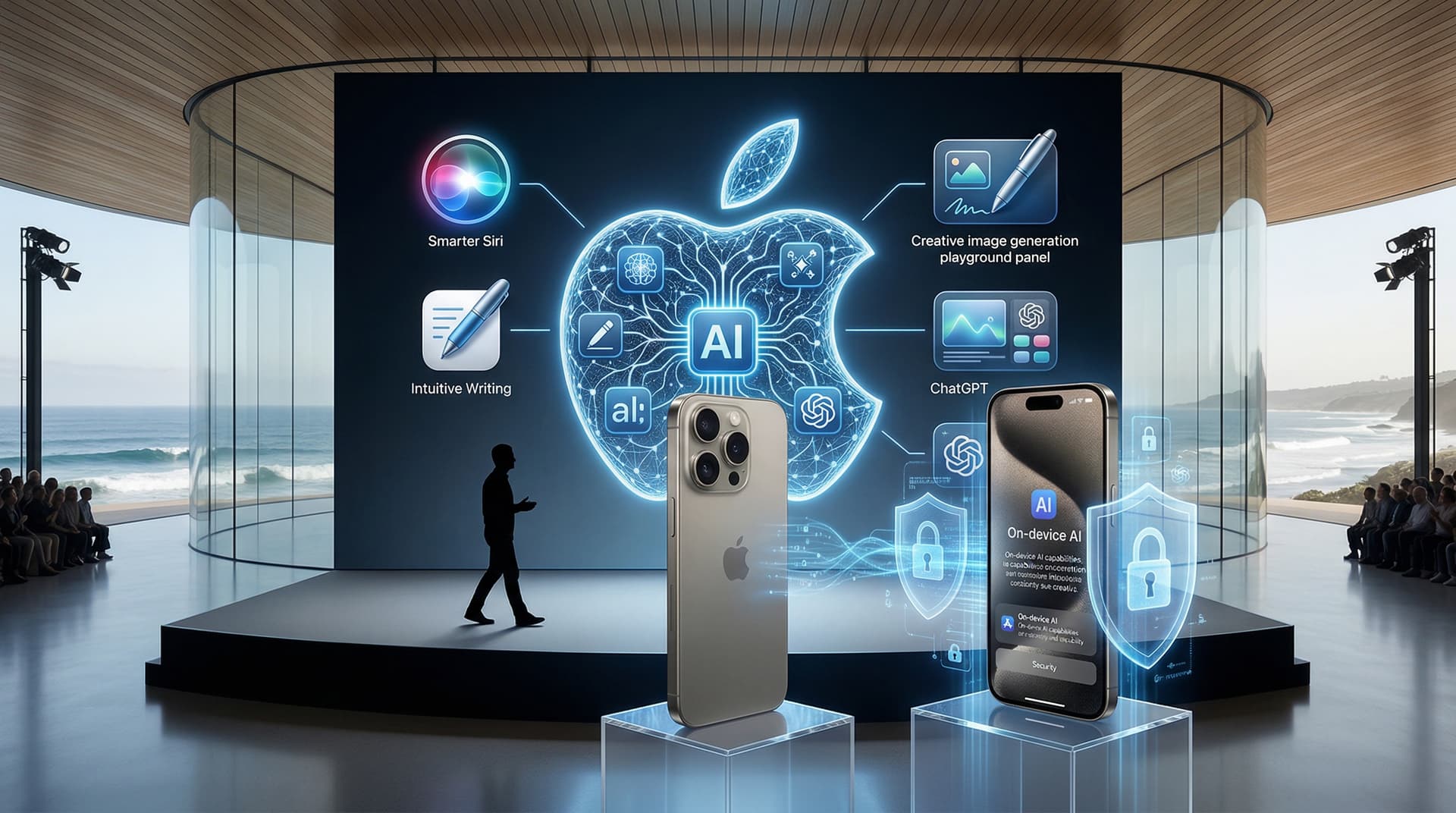
On September 12, 2023, during its highly anticipated "Wonderlust" event, Apple took a significant leap into the artificial intelligence arena with the introduction of Apple Intelligence. This comprehensive suite of AI-powered features is set to transform user experiences across iOS 18, iPadOS 18, macOS Sequoia, and even visionOS for the Vision Pro headset. CEO Tim Cook described it as "the next chapter of the iPhone" and a personal intelligence system designed with privacy at its core.
The Big Reveal: What is Apple Intelligence?
Apple Intelligence isn't just a single tool; it's an intelligent foundation woven into the fabric of Apple's operating systems. It leverages the power of Apple Silicon chips—specifically A17 Pro in the iPhone 15 Pro models and M-series chips in Macs and iPads—to run generative AI models directly on-device. This approach contrasts sharply with cloud-heavy competitors like Google and Microsoft, prioritizing speed, efficiency, and user data security.
Key features include:
- Writing Tools: A system-wide tool that helps users proofread, rewrite, and summarize text in apps like Mail, Notes, and third-party applications. Users can choose tones from professional to casual.
- Image Playground and Genmoji: Create original images and custom emojis using simple descriptions. Powered by Apple's own diffusion models, these tools allow playful yet practical visual generation.
- Smart Siri: An upgraded Siri with improved language understanding, the ability to act across apps, and on-screen awareness. Siri can now handle complex, multi-step requests like "Add the recipe ingredients to my shopping list."
- Photos App Enhancements: Clean Up tool to remove unwanted objects, natural language search for memories (e.g., "Maya skateboarding last summer"), and video generation from still images.
- Notification Management: Prioritize and summarize notifications, reducing alert fatigue.
Apple also announced a partnership with OpenAI to optionally integrate ChatGPT into the ecosystem. Users can invoke ChatGPT for advanced queries when Apple's models aren't sufficient, with no account required and privacy safeguards in place—queries aren't logged, and IP addresses are obscured.
Privacy and Security: Apple's Differentiator
Privacy has been Apple's rallying cry, and Apple Intelligence doubles down on it. Most processing happens on-device using compact large language models optimized for Apple Silicon. For more demanding tasks, requests go to "Private Cloud Compute" servers running Apple silicon, with no data storage and verifiable transparency via published math proofs and open-source tooling.
Craig Federighi, Apple's senior VP of Software Engineering, emphasized: "We're proud to start a new chapter of the Siri journey with Apple Intelligence. It's more capable, more intuitive, and more private than ever."
This stance positions Apple against rivals facing scrutiny over data practices. While Google integrates Gemini into Android and Search, and Microsoft embeds Copilot across its stack, Apple's on-device focus appeals to privacy-conscious consumers.
Hardware Powering the AI Revolution
Apple Intelligence requires devices with sufficient neural engine power:
- iPhone 15 Pro and Pro Max (A17 Pro chip)
- M1 and later Macs and iPads
The new iPhone 15 lineup, including standard models with USB-C and improved cameras, sets the stage. The Action Button on Pro models adds utility, like activating Siri with a press-and-hold.
Apple's AI Journey: From Laggard to Leader?
Apple has been relatively quiet on generative AI amid the ChatGPT frenzy sparked in late 2022. Internal efforts, reportedly involving hundreds of engineers, focused on building foundation models suited to its ecosystem. Partnerships with Broadcom for AI server chips signal long-term cloud ambitions.
Analysts see this as Apple's bid to reclaim innovation leadership. Wedbush's Dan Ives called it a "game changer," predicting it could drive upgrade cycles. However, the beta rollout starts in 2024 for English (U.S.), expanding later, which tempers immediate impact.
Competitors reacted swiftly. Google highlighted its on-device AI in Pixel 8, while OpenAI's Sam Altman praised the collaboration on X (formerly Twitter).
Broader Implications for AI and Tech
Apple Intelligence raises the bar for consumer AI. By embedding it natively, Apple ensures seamless integration, potentially accelerating adoption. Developers get APIs via Apple Foundation Models framework for app-specific custom models.
This move also underscores the AI arms race. With Amazon's $4B Anthropic investment earlier in September and ongoing Stable Diffusion advancements, the field is crowded. Apple's closed ecosystem gives it control but limits third-party extensibility compared to Android.
Challenges remain: Hallucinations in generative AI, ethical image generation, and ensuring inclusivity across languages. Apple promises ongoing improvements via software updates.
Looking Ahead
As iOS 18 developer betas roll out now, with public betas this month and full release alongside iPhone 16 next year, excitement builds. Apple Intelligence isn't just features—it's a philosophical stance: powerful AI should be personal, private, and accessible.
In a world where AI hype meets real-world utility, Apple's entry could redefine smartphones. Whether it leapfrogs competitors or iterates safely remains to be seen, but September 12 marked a pivotal moment in AI's evolution.
CSN News will continue tracking Apple Intelligence developments.
(Word count: 912)