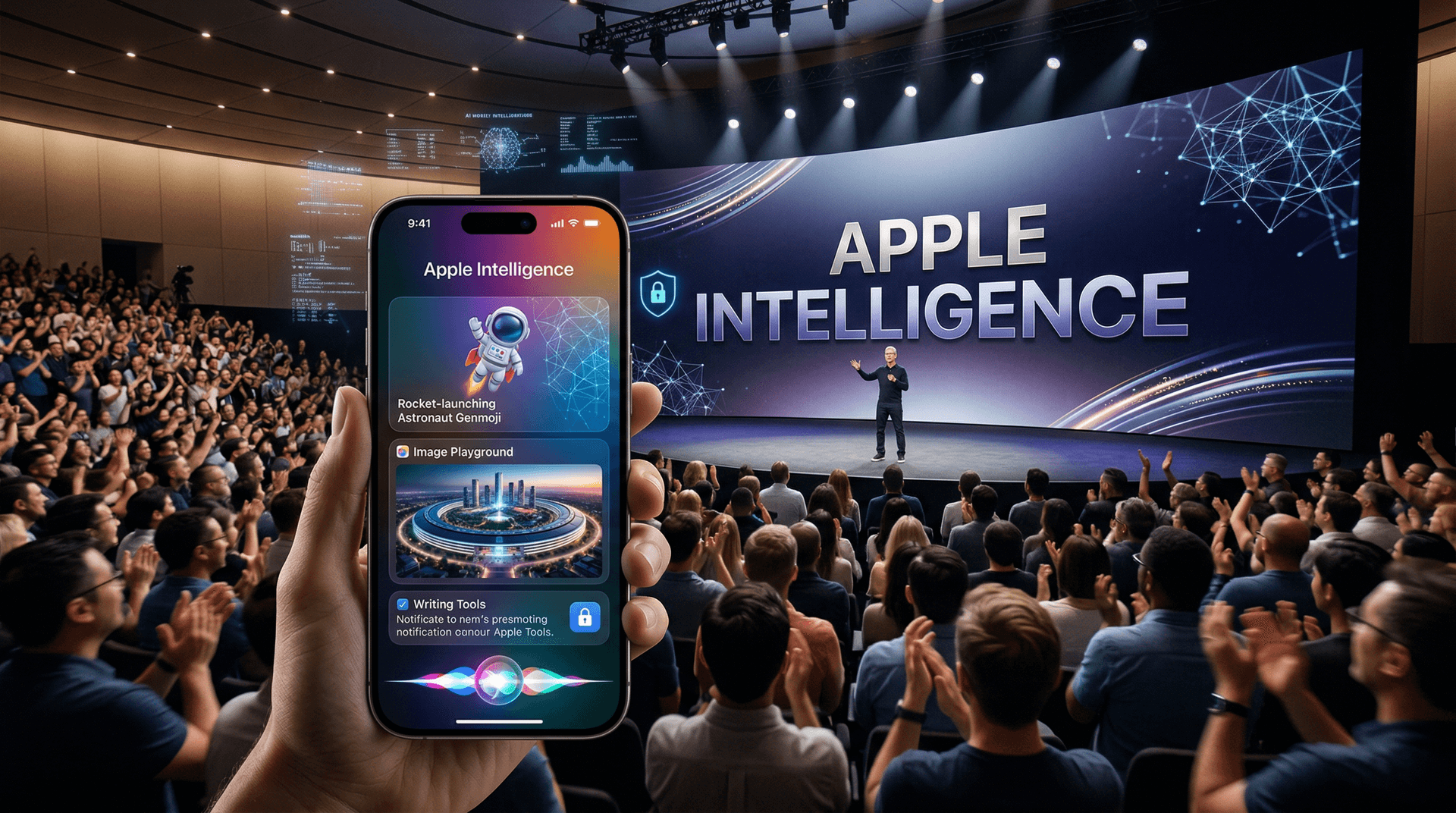
In a highly anticipated move, Apple took center stage at its Worldwide Developers Conference (WWDC) on June 10, 2024, to unveil Apple Intelligence, a groundbreaking suite of AI features designed to transform everyday interactions across its ecosystem. This announcement marks Apple's bold entry into the generative AI arena, dominated so far by players like OpenAI, Google, and Microsoft. Unlike cloud-heavy competitors, Apple emphasizes on-device processing to prioritize user privacy, a core tenet of its brand.
The keynote, delivered by CEO Tim Cook and a team of executives, detailed how Apple Intelligence will integrate seamlessly into iOS 18, iPadOS 18, macOS Sequoia, and even visionOS for Vision Pro. Powered by Apple silicon's neural engines, these features promise to make devices smarter without compromising data security. 'Intelligence that understands you, protects your privacy, and is powerful enough to change your life,' Cook declared, setting the tone for what's poised to be a game-changer in consumer AI.
Core Features of Apple Intelligence
At the heart of Apple Intelligence is a set of generative AI tools tailored for productivity and creativity:
Enhanced Siri
Siri, Apple's long-standing virtual assistant, receives its most significant upgrade yet. Now contextually aware of on-screen content, personal data, and across-app actions, Siri can execute complex, multi-step tasks. For instance, it can reference emails, photos, or notes to answer queries like 'Add the address from that email to my contact.' On-device large language models enable natural language understanding, while integration with ChatGPT (via OpenAI partnership) handles more demanding requests with user permission.
Writing Tools
Powered by generative models, these tools assist across apps like Mail, Notes, and Pages. Users can proofread, rewrite in different tones (professional, concise, enthusiastic), or summarize long texts. Table generation from raw data is another highlight, making it invaluable for professionals and students alike.
Image Playground and Genmoji
Creativity gets a boost with Image Playground, allowing users to generate images from text descriptions directly in Messages or Freeform. Choose styles like animation or illustration for custom visuals. Complementing this are Genmoji, where users create personalized emojis from photos or descriptions—think a cartoon version of your dog with sunglasses.
Photo Editing and Memory Movies
In the Photos app, Clean Up uses AI to remove unwanted objects effortlessly. The new movie feature generates cinematic videos from photo libraries, complete with narration and music, based on themes like 'beach vacation.'
Notification and Audio Summaries
Overwhelmed by notifications? Apple Intelligence prioritizes and summarizes them intelligently. Transcribe and summarize audio recordings in Notes, reducing hours of meetings to key points.
Privacy by Design
Apple's approach stands out with its Private Cloud Compute system. For tasks exceeding on-device capabilities, data is processed on custom Apple silicon servers without retention or logging. Independent audits verify this, and no data is used for model training. This contrasts sharply with competitors' data-hungry models, appealing to privacy-conscious users.
The partnership with OpenAI for ChatGPT integration is opt-in, with no data shared without explicit consent. Apple also supports alternative models from Google Gemini or others via APIs, giving users choice.
Developer Ecosystem and Availability
For developers, Apple introduced APIs and SDKs to build Apple Intelligence features into apps. Core ML gets upgrades for efficient model deployment, and the on-device foundation models (small, medium, large) are available for customization.
Rollout begins this fall with iOS 18 beta for developers, preview for public in July, and full release alongside iOS 18 in September. Compatibility requires A17 Pro or M1 chips and up, covering recent iPhones (15 Pro+), iPads, and Macs. Some features, like advanced Siri, arrive in 2025.
Apple's Strategic Positioning in AI
This launch comes amid intense competition. OpenAI's GPT-4o (May 2024) and Google's Gemini advancements have set high bars for multimodal AI. Apple's delay—criticized by some as lagging—allows it to leapfrog with a privacy-centric, integrated experience. By leveraging its 2 billion+ active devices, Apple could accelerate AI adoption more than any startup.
Financially, it's timely. Apple's services revenue, including App Store, benefits from AI-enhanced apps. Investors reacted positively, with shares up post-keynote, buoyed by AI's trillion-dollar potential.
Critics note reliance on partners like OpenAI, but Apple's vertical integration—hardware, software, silicon—ensures optimization. WWDC sessions delved into ML frameworks, signaling long-term commitment.
Broader Implications for AI and Machine Learning
Apple Intelligence democratizes generative AI, making it accessible without subscriptions (beyond optional ChatGPT Plus). It challenges the notion that bigger models always win; efficient on-device inference proves smaller, specialized LLMs suffice for most tasks.
In machine learning, it highlights federated learning and differential privacy advances. Expect ripple effects: competitors may prioritize edge AI, and regulators will eye Apple's influence on standards.
As AI permeates daily life, Apple's focus on human-centric design—intuitive, safe, private—could redefine the field. WWDC 2024 wasn't just an event; it was a statement: Apple is here, and it's reimagining intelligence on your terms.
CSN News will follow up with hands-on reviews and developer interviews as features roll out.