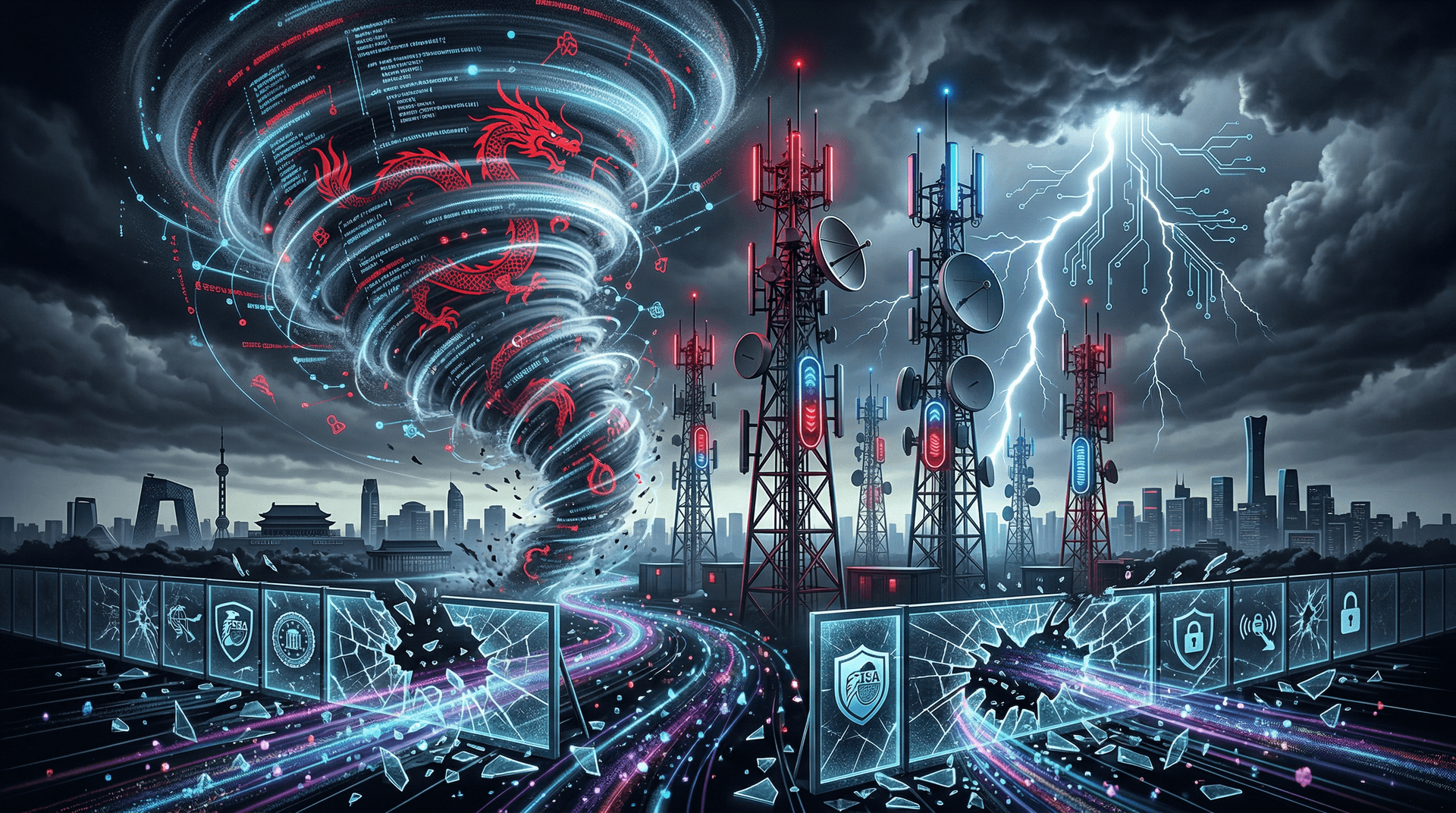
Washington, DC – October 12, 2024 – In a stark revelation underscoring the intensifying cyber cold war, U.S. cybersecurity agencies including the Cybersecurity and Infrastructure Security Agency (CISA), FBI, and National Security Agency (NSA) have issued urgent warnings about a pervasive Chinese hacking campaign known as Salt Typhoon. This sophisticated operation has compromised networks at several major U.S. telecommunications providers, including AT&T, Verizon, and Lumen Technologies, with intruders potentially gaining access to systems used for court-authorized wiretaps and metadata collection.
The disclosures, first detailed in The Wall Street Journal on October 8 and followed by official advisories, paint a picture of deep infiltration. Salt Typhoon, attributed to China's Ministry of State Security (MSS)-linked actors, has been active since at least mid-2024. Hackers exploited vulnerabilities in network management tools, such as Cisco routers and edge devices, to establish persistent footholds. Once inside, they pivoted to sensitive servers handling lawful interception requests under the Communications Assistance for Law Enforcement Act (CALEA).
The Scope of the Breach
According to the joint CISA advisory released on October 9, Salt Typhoon actors targeted at least eight telecom firms, focusing on lawful intercept platforms. These systems are designed to facilitate government surveillance warrants, routing call records, metadata, and even live communications to law enforcement. The hackers' access could have exposed not just U.S. citizens' data but also high-profile targets like politicians and diplomats.
FBI Director Christopher Wray, in recent congressional testimony, alluded to the breach's severity, noting that Chinese espionage now constitutes 60% of the nation's cyber threat landscape. "These intrusions aren't opportunistic; they're systematic efforts to steal our secrets and undermine our security," Wray stated.
Telecom giants have responded variably. AT&T confirmed "unauthorized access" to some legacy systems but claimed no customer data was compromised. Verizon described the incident as "targeted nation-state activity" and said it had contained the threat. Lumen, formerly CenturyLink, reported similar findings. However, experts question the full extent, as telecoms often operate fragmented networks with thousands of endpoints ripe for exploitation.
Technical Breakdown: How Salt Typhoon Operated
Salt Typhoon's tactics, techniques, and procedures (TTPs) mirror those of advanced persistent threats (APTs) like Volt Typhoon, another Chinese group targeting critical infrastructure. Initial access likely came via phishing or supply chain compromises, followed by exploitation of unpatched flaws in products from Cisco, NetScaler, and others.
Key indicators from the CISA advisory include:
- Use of compromised SOHO (small office/home office) routers as command-and-control (C2) nodes.
- Custom malware dubbed "GhostSpider" for persistence.
- Living-off-the-land techniques, leveraging legitimate tools like PowerShell and WMIC.
- Data exfiltration to IP addresses in China.
"This is textbook Chinese cyber espionage," said Dmitri Alperovitch, co-founder of CrowdStrike and Silverado Policy Accelerator. "They're not ransomware criminals; they're intelligence operatives building backdoors for long-term access. Telecoms are goldmines for SIGINT (signals intelligence)."
The campaign echoes 2021's SolarWinds hack but focuses on wireline infrastructure. Unlike ransomware, there's no immediate disruption—making detection harder.
Geopolitical Context and Implications
Tensions between the U.S. and China have fueled such incursions. Beijing's 2024 push for tech self-reliance amid U.S. export controls on chips has spurred aggressive cyber operations. Salt Typhoon aligns with MSS objectives: economic espionage, military intelligence, and influence operations.
Impacts extend beyond privacy. Compromised wiretaps could taint legal proceedings, erode trust in 5G networks, and expose dissidents tracked via U.S. systems. "If adversaries can tap our taps, it neuters a key national security tool," noted Jake Williams, former NSA analyst and founder of Rendium.
Economically, remediation costs telecoms millions. Verizon alone spends over $1 billion annually on cybersecurity, per SEC filings. Broader fallout includes stock dips—AT&T shares fell 2% post-disclosure—and regulatory scrutiny from the FCC.
U.S. Response and Mitigation Efforts
CISA's #StopSaltTyphoon initiative urges organizations to: 1. Patch known vulnerabilities (e.g., CVE-2024-21762 in NetScaler). 2. Implement network segmentation for lawful intercept systems. 3. Hunt for IOCs like specific malware signatures. 4. Enhance SOHO device security.
The Biden administration is invoking the Defense Production Act to bolster telecom resilience. Private sector collaboration via the Joint Cyber Defense Collaborative (JCDC) has accelerated threat sharing.
Internationally, Five Eyes allies issued parallel alerts. Australia and Canada reported similar telecom probes.
Expert Opinions and Future Outlook
"Salt Typhoon is the new normal," warns Amy Miyamoto, CEO of Dragonfly Intelligence. "With quantum threats looming, classical encryption won't cut it. We need post-quantum crypto yesterday."
Optimism lies in AI-driven defenses. Companies like Palo Alto Networks demoed behavioral analytics that flagged Salt Typhoon-like anomalies in simulations.
As of October 12, investigations continue. Full attribution may take months, but the message is clear: Cyber borders are porous. U.S. telecoms must fortify, or risk becoming unwitting pawns in great-power rivalry.
CSN News will monitor developments. Stay tuned for updates.
Word count: 912