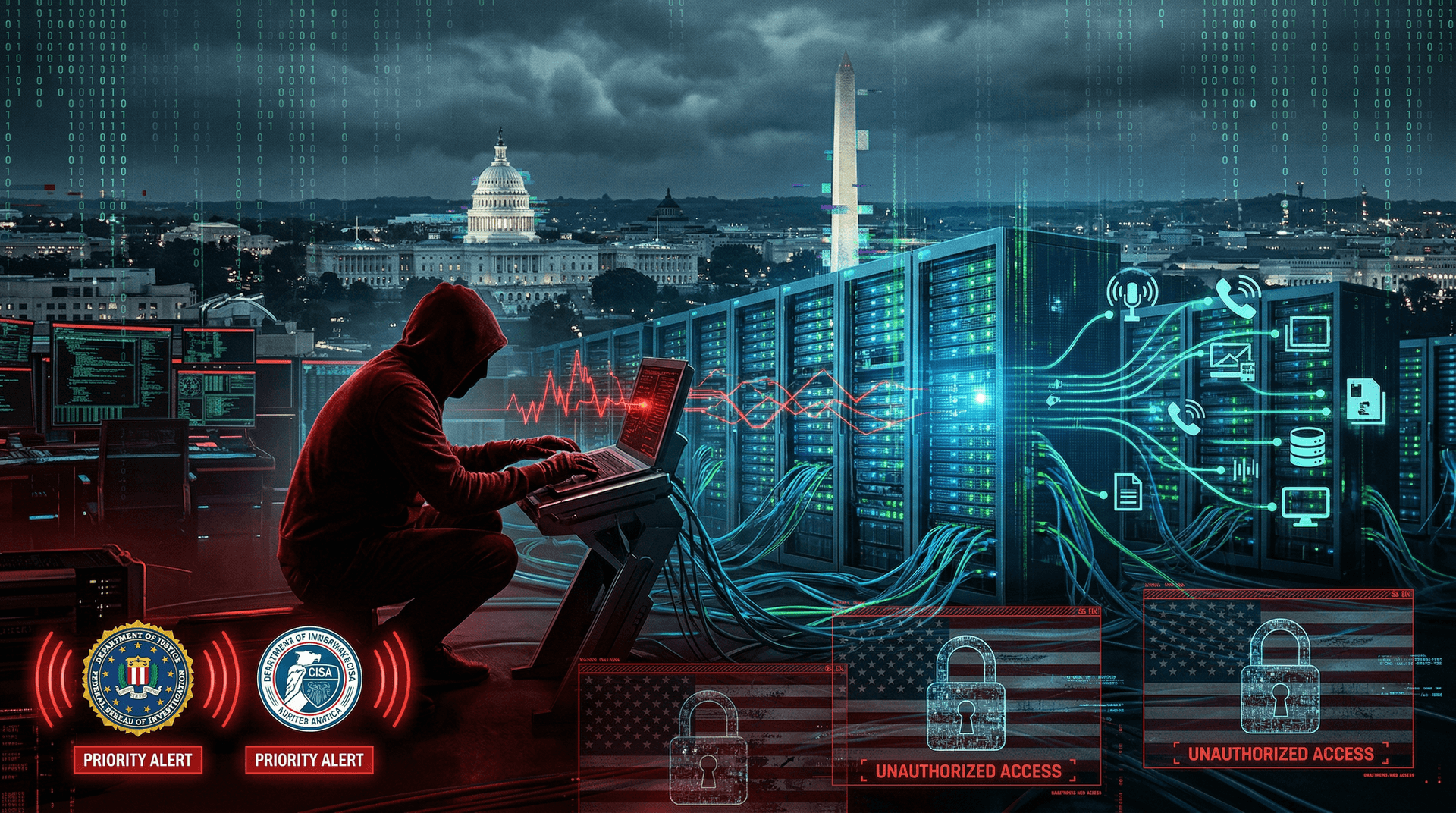
Washington, DC – December 17, 2024 – In a stark warning that underscores the escalating cyber threats from nation-states, the FBI and Cybersecurity and Infrastructure Security Agency (CISA) disclosed on Monday that a sophisticated Chinese hacking group, dubbed Salt Typhoon, has compromised at least eight major US telecommunications providers. The breach, ongoing since at least mid-2024, allowed intruders unprecedented access to wiretap systems, call records, and unencrypted metadata, potentially targeting high-profile political figures including President Joe Biden, Vice President Kamala Harris, and President-elect Donald Trump.
The Scope of the Salt Typhoon Intrusion
Salt Typhoon, tracked by Microsoft as a subgroup of the larger China-nexus Mustang Panda operation, exploited vulnerabilities in network management tools and legitimate administrative credentials to burrow deep into telecom infrastructures. Affected companies reportedly include AT&T, Verizon, Lumen Technologies, and others, with hackers routing traffic through compromised routers to maintain persistence. According to a joint advisory released by CISA, the attackers gained the ability to "search and exfiltrate customer and call records en masse," including location data and internet browsing activity.
The campaign's audacity lies in its focus on tools designed for lawful surveillance under the Foreign Intelligence Surveillance Act (FISA). Hackers commandeered these systems to spy on Americans, marking one of the most direct assaults on US communications infrastructure in recent memory. FBI Director Christopher Wray highlighted the breach during a December 17 briefing, stating, "This is not a theoretical risk—it's happening now. Salt Typhoon has positioned itself at the heart of our telecom backbone."
Timeline and Attribution
The intrusions were first detected in August 2024, but full attribution to Chinese state actors came after months of forensic analysis. Microsoft Threat Intelligence first publicly named Salt Typhoon in October, linking it to intrusions at a California broadband provider. By November, the scope expanded, with telecom executives privately briefing congressional committees.
On December 17, CISA issued Emergency Directive 25-02, mandating federal agencies to disconnect from compromised networks and implement multi-factor authentication (MFA) across all systems. The directive also calls for hunting for Salt Typhoon indicators of compromise (IOCs), including specific IP addresses tied to People's Republic of China (PRC) infrastructure.
Attribution points firmly to PRC state-sponsored actors, with tactics mirroring those used in previous campaigns like Volt Typhoon, which targeted critical infrastructure ahead of potential conflicts. Cybersecurity firm Mandiant corroborated the findings, noting overlaps in tooling and command-and-control servers.
National Security Implications
The breach raises profound concerns for US national security. Telecoms handle vast troves of sensitive data, from government officials' communications to corporate executives' calls. Reports suggest Salt Typhoon specifically queried records associated with political campaigns and government agencies, fueling fears of election interference despite the 2024 vote having concluded.
"This is cyber Pearl Harbor territory," said Dmitri Alperovitch, co-founder of CrowdStrike and a leading cyber expert. "By owning the wiretap infrastructure, adversaries can monitor anyone the US government can legally surveil—and more. It's a masterstroke in espionage."
The incident compounds tensions in US-China relations, already strained by trade disputes and Taiwan rhetoric. It echoes the 2021 Microsoft Exchange hacks and the 2023 MOVEit supply chain attack, but with a sharper focus on espionage over disruption.
Industry and Government Response
Telecom giants have scrambled into damage control. AT&T issued a statement affirming its cooperation with authorities and implementation of enhanced network segmentation. Verizon similarly confirmed no evidence of customer data theft but committed to "aggressive remediation."
CISA's directive provides technical guidance: disconnecting from edge routers showing anomalous traffic, deploying endpoint detection tools, and auditing SOHO devices—a common entry vector. The agency has stood up a 24/7 incident response team, urging private sector partners to report via isac@cisa.dhs.gov.
Broader policy responses are brewing. Senate Intelligence Committee members called for hearings, while House Republicans demanded sanctions on implicated Chinese entities. President Biden's administration, in its final weeks, is reportedly accelerating offensive cyber operations against PRC hackers.
Lessons for Cybersecurity Posture
Salt Typhoon exposes perennial weaknesses: overreliance on legacy protocols, poor segmentation, and inadequate supply chain vetting. Telecoms, regulated under FCC oversight, have long lagged in zero-trust architectures despite billions in 5G investments.
Experts recommend immediate steps:
- Hunt for Persistence: Scan for tools like Sliver C2 frameworks used by Salt Typhoon.
- Harden Borders: Implement network telemetry and AI-driven anomaly detection.
- Credential Hygiene: Enforce phishing-resistant MFA and just-in-time access.
- Supply Chain Audits: Vet routers from vendors like Cisco and Huawei alternatives.
"The telecom sector must treat nation-state threats as existential," noted Jen Easterly, CISA Director, in the advisory. "This is a wake-up call to re-architect for resilience."
Global Echoes and Future Risks
The US isn't alone. Similar Salt Typhoon activity hit telecoms in at least two dozen countries, including India, Italy, and New Zealand. In Europe, France's ANSSI reported a related intrusion on December 12, heightening NATO concerns over hybrid warfare.
As 2025 dawns with a new US administration, expect intensified cyber diplomacy. Trump transition officials have signaled a hawkish stance, potentially including telecom supply chain bans.
In an era of AI-augmented attacks, Salt Typhoon reminds us: the digital battlefield is borderless, and complacency is the greatest vulnerability. US telecoms and allies must fortify now—or risk more breaches tomorrow.
CSN News will continue monitoring developments in this critical cybersecurity story.