In one of the largest IT disruptions in recent history, cybersecurity giant CrowdStrike faces intense scrutiny after a flawed update to its Falcon Sensor software crashes millions of Windows machines worldwide. The incident, which began on July 19, 2024, sends shockwaves through global industries, grounding flights, halting banking operations, and overwhelming emergency services. As of July 23, recovery remains patchy, with experts warning of prolonged economic fallout.
The Trigger: A Single Faulty Update
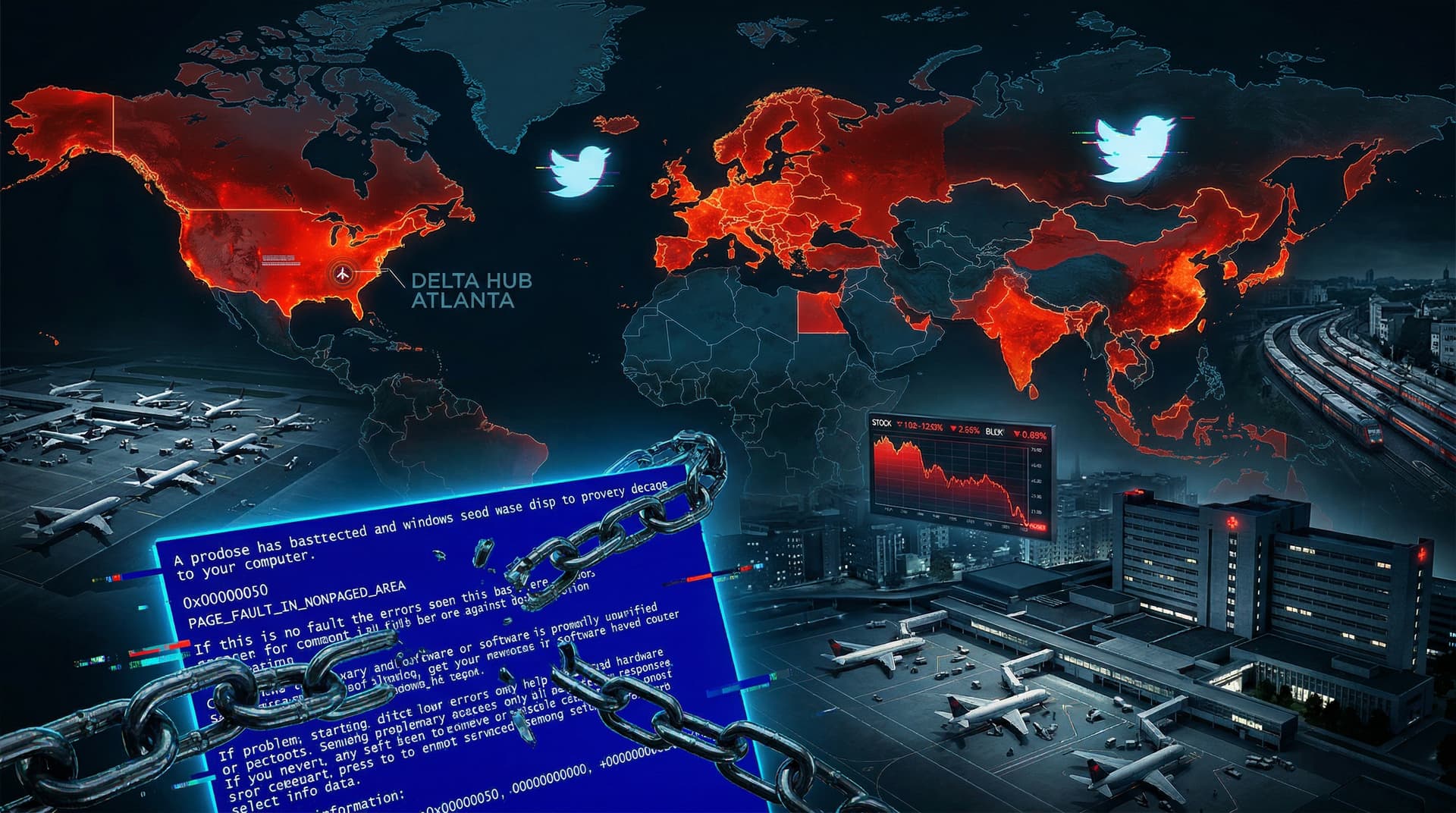
CrowdStrike, a leader in endpoint detection and response (EDR) with over 30,000 customers including Fortune 500 companies, pushed a content configuration update to its Falcon platform late on July 19. This update, intended to enhance threat detection, contained a logic error that caused compatible Windows hosts to encounter a bluescreen of death (BSOD) during boot-up. The crash manifests as the infamous recovery screen with error code 0x00000050, rendering systems inoperable.
"This is not a security incident or cyberattack," CrowdStrike CEO George Kurtz clarifies in a statement today. "Rather, it stems from a defect found in a single content update for Windows hosts using our Falcon Sensor." Mac and Linux systems remain unaffected, narrowing the blast radius but amplifying the chaos on Windows-dominated enterprise environments.
CrowdStrike identifies the issue within hours and revokes the problematic update via its cloud dashboard. However, the damage proves irreversible without manual intervention. Customers must boot into Windows Recovery Environment, navigate to safe mode, and delete the faulty 'C-00000291.sys' file from the CrowdStrike directory—a process that demands technical expertise and physical access to machines.
Widespread Chaos: Airlines Grounded, Hospitals in Crisis
The outage hits hardest in sectors reliant on real-time computing. Delta Air Lines reports over 1,000 flight cancellations on July 19 and 20, with ripple effects stranding thousands of passengers. As of July 23, Delta operates at reduced capacity, citing lingering system issues. United Airlines and American Airlines also scramble, with crew scheduling and check-in systems offline.
In healthcare, the UK's National Health Service (NHS) declares a level 4 critical incident, with 22 hospital trusts experiencing outages. U.S. hospitals like those in New York and Texas report delays in patient care, as electronic health records and imaging systems fail. "We've reverted to paper charts," one clinician tells CSN News, highlighting the fragility of digital infrastructure.
Financial services suffer too. Banks such as JPMorgan Chase and trading platforms face transaction halts. Stock exchanges in New Zealand and South Africa suspend trading briefly. Retail giants like Starbucks report payment processing failures, forcing cash-only operations.
Microsoft, whose Windows ecosystem bears the brunt, collaborates closely with CrowdStrike. "We are working around the clock," Microsoft says in a blog post updated today. Azure cloud services remain stable, but on-premises and virtualized Windows instances crash en masse.
Economic Toll Mounts
Analysts estimate the outage costs billions. An early figure from Parametrix pegs direct losses at $5.4 billion, factoring in airline disruptions alone. Insurance claims pile up, with cyber insurers like those at Lloyd's of London assessing coverage—though this software flaw may fall outside traditional policies.
"This event underscores the risks of single-vendor dependency in cybersecurity," says Gartner analyst Ruggero Contu. CrowdStrike's Falcon platform protects against ransomware and breaches, but its own update exposes a vulnerability: rapid deployment without sufficient testing.
CrowdStrike's Response and Timeline
CrowdStrike activates its incident response team immediately. By July 20, the company publishes detailed remediation guides, including scripted tools for enterprise deployment. A support portal sees unprecedented traffic, with engineers working 24/7.
Today, July 23, Kurtz testifies in a virtual town hall, promising transparency. "We will share our root cause analysis publicly once complete," he vows. Microsoft hosts a joint call with CrowdStrike, outlining fixes for virtual machines via Hyper-V recovery.
Progress varies: Some enterprises, like those with automated patch management, recover swiftly. Others, with air-gapped or remote systems—like those on oil rigs or cargo ships—face days of downtime.
Expert Analysis: Why Did This Happen?
Cybersecurity experts point to channel file vulnerabilities. Falcon Sensor uses kernel drivers for deep system visibility, making updates high-stakes. The defective XML-like content file triggers an out-of-bounds memory read, crashing the kernel.
"It's a classic case of configuration drift," explains security researcher Kevin Beaumont, aka @GossiTheDog on X. "CrowdStrike's quality gates failed on this rapid-release channel."
This isn't CrowdStrike's first brush with issues—a 2020 AWS outage affected its sensors—but scale dwarfs predecessors. Comparisons to SolarWinds (2020 supply chain attack) arise, though this lacks malice.
Regulators take note. The U.S. Department of Homeland Security's CISA issues alerts, urging vigilance against opportunistic attacks amid chaos. No confirmed exploits emerge, but phishing attempts spike.
Lessons for the Industry
The outage exposes cybersecurity's double-edged sword: EDR tools like Falcon are indispensable yet introduce failure points. Experts advocate:
- Diversification: Avoid single-vendor lock-in.
- Testing Rigor: Staged rollouts and canary deployments.
| Impact Area | Examples | Status as of July 23 | |-------------|----------|----------------------| | Airlines | Delta (1,000+ cancellations), United | Partial recovery, delays persist | | Healthcare | NHS trusts, U.S. hospitals | Manual operations, systems rebooting | | Finance | Banks, exchanges | Most online, transaction backlogs | | Retail | Starbucks, supermarkets | Cash fallback discontinued |
Looking Ahead: Rebuilding Trust
CrowdStrike's stock dips 11% on July 22 but stabilizes today amid recovery news. Customers voice frustration—some explore rivals like SentinelOne or Microsoft Defender—but loyalty persists given Falcon's efficacy against threats like LockBit ransomware.
As systems flicker back online, the industry reflects. "This is a wake-up call for resilience," says cybersecurity professor Mikko Hyppönen. "In an always-on world, one update can halt the planet."
CrowdStrike pledges improvements, including enhanced validation. For now, the world reboots—one BSOD at a time.
(Word count: 1028)