By [Your Name], Senior Tech Journalist | July 23, 2024
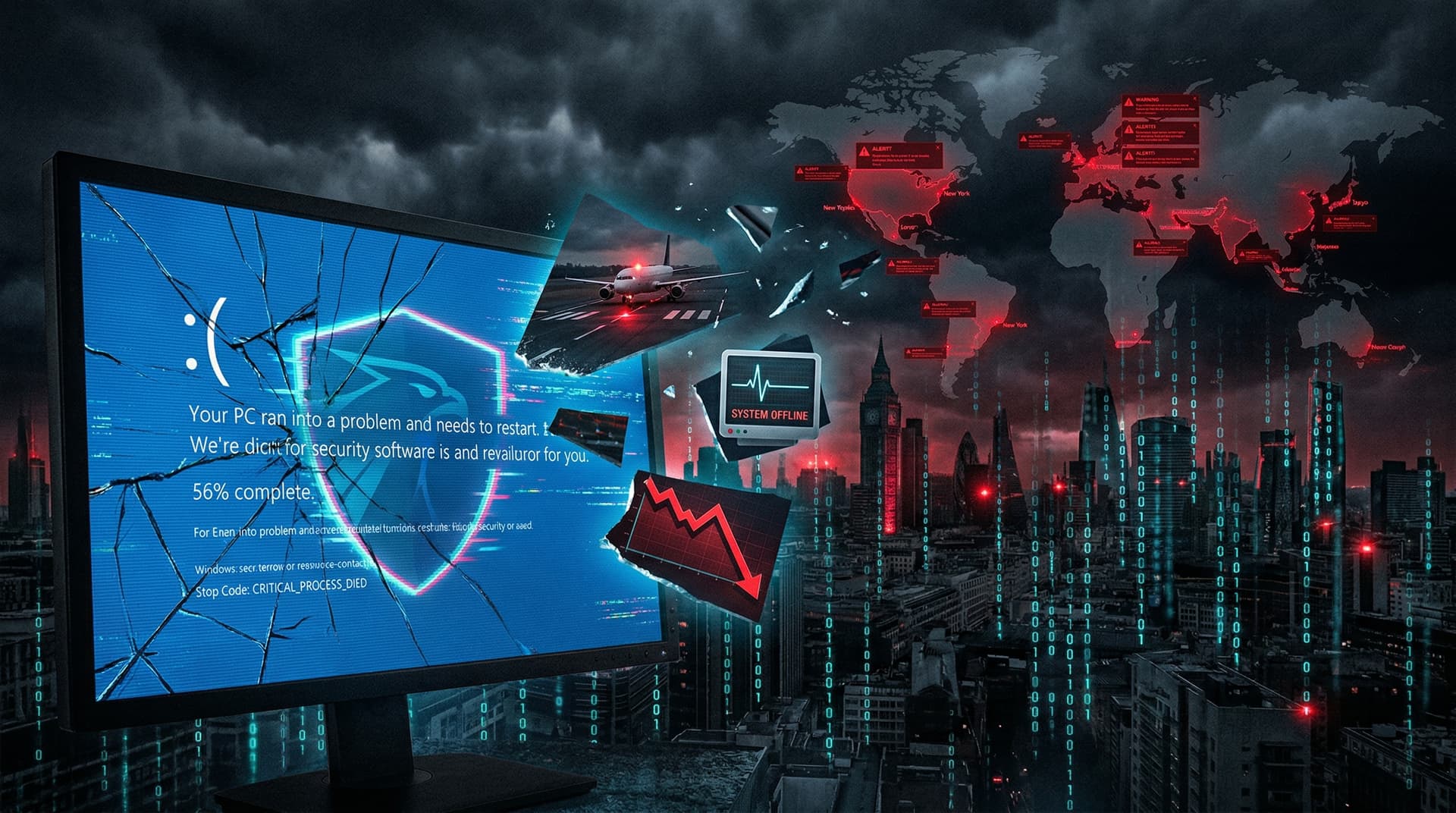
In one of the most disruptive IT incidents in recent history, a faulty update to CrowdStrike's Falcon cybersecurity software brought swaths of the global economy to a standstill on July 19, 2024. What began as a routine deployment of a content configuration update spiraled into a cascade of Blue Screen of Death (BSOD) errors on millions of Windows machines, paralyzing airlines, hospitals, financial institutions, and countless other sectors reliant on the platform.
The Incident Unfolds
CrowdStrike Holdings Inc., a leading provider of endpoint detection and response (EDR) solutions, identified the root cause as a defect in a single content configuration file pushed through its Channel File 291 channel. This update, intended to enhance threat detection capabilities, instead triggered kernel-level crashes on Windows hosts running Falcon sensor version 7.11 and higher.
The outage erupted around 4:00 AM ET on Friday, coinciding with peak travel and business hours across time zones. Within hours, reports flooded in from every corner of the globe. Delta Air Lines, a major CrowdStrike customer, grounded over 1,000 flights, stranding thousands of passengers and racking up millions in losses. United Airlines and other carriers faced similar woes, with airport screens worldwide displaying error messages and check-in systems offline.
Healthcare providers weren't spared. The UK's National Health Service (NHS) reported disruptions at numerous hospitals, forcing manual processes for patient care. In the U.S., entities like Cleveland Clinic and Mass General Brigham scrambled to restore operations. Financial services giant Charles Schwab saw trading platforms halt, while broadcasters such as Sky News in the UK went off-air mid-transmission.
Microsoft, whose Windows OS bore the brunt, confirmed the issue affected Azure cloud services and its own endpoints. "This is not a Microsoft outage," the company stressed, pointing fingers squarely at the third-party update.
Scale of the Disruption
Estimates suggest up to 8.5 million Windows devices were impacted, representing a significant portion of enterprise endpoints protected by Falcon. CrowdStrike's customer base spans Fortune 500 companies, government agencies, and critical infrastructure, amplifying the fallout.
Travel was hit hardest. The U.S. Federal Aviation Administration (FAA) issued advisories as air traffic control systems at major hubs like Atlanta's Hartsfield-Jackson faltered. Ports in Los Angeles and Long Beach reported cargo processing delays. Retailers like Starbucks couldn't process orders via apps, turning to cash-only modes.
Economic tolls mounted quickly. Analysts from Paramount Bed in Japan pegged initial losses at $5.4 billion globally, though figures are preliminary. Delta alone projected $500 million in revenue hits from canceled flights and crew rescheduling.
CrowdStrike's Response and Technical Breakdown
CrowdStrike CEO George Kurtz addressed the crisis head-on via X (formerly Twitter), assuring stakeholders: "This is not a cyberattack. We have identified Falcon Sensor content configuration issue and have pulled the faulty files."
Recovery proved arduous. Unlike typical patches, the BSOD required booting into Windows Recovery Environment (WinRE) or Safe Mode to delete the rogue file (C-00000291.sys) from C:\Windows\System32\drivers\CrowdStrike. Enterprises without remote access faced physical interventions—IT teams dispatched to data centers and offices worldwide.
CrowdStrike published detailed remediation guides, including PowerShell scripts for automation. By July 20, the company reported most high-impact customers back online, but full restoration lagged. As of July 23, Kurtz noted over 97% recovery, with stragglers tied to complex environments like air-gapped systems.
The firm invoked its 24/7 Global Response Team and committed to transparency, promising a post-incident review. "We know this was painful for customers," Kurtz said, pledging preventive overhauls like enhanced testing for channel updates.
Why Did This Happen?
At its core, the failure stemmed from inadequate validation in CrowdStrike's update pipeline. Falcon operates in kernel mode—the most privileged level of Windows—for real-time threat hunting. A malformed configuration overwhelmed the driver, invoking a crash loop.
Experts highlight systemic risks in cybersecurity tooling. EDR platforms like Falcon are "always-on" defenders, but their aggressiveness invites single points of failure. "This underscores the fragility of third-party kernel drivers," noted cybersecurity analyst Kevin Beaumont. "One vendor's glitch can topple ecosystems."
Regulatory scrutiny looms. The U.S. Department of Homeland Security's CISA urged incident reporting, while the UK's National Cyber Security Centre (NCSC) activated response protocols. Lawmakers, including Sen. Josh Hawley, demanded briefings on national security implications.
Broader Implications for Cybersecurity
This event eclipses past outages like the 2021 SolarWinds hack or 2023 MOVEit breach in sheer breadth, if not malice. It exposes over-reliance on dominant players: CrowdStrike boasts 29% market share in EDR.
Lessons abound:
- Diversification: Organizations should avoid single-vendor lock-in for critical defenses.
- Testing Rigor: Simulate updates in staging environments mimicking production diversity.
- Rollback Mechanisms: Automated canary deployments and quick-revert tools are essential.
- Resilience Planning: Hybrid manual/digital recovery drills for kernel failures.
Microsoft's push for stricter driver signing and its own Defender enhancements may gain traction. Competitors like Palo Alto Networks (Cortex XDR) and SentinelOne reported no similar issues, positioning for gains.
CrowdStrike's stock plunged 11% on July 19 before rebounding, reflecting investor jitters. Long-term, trust hinges on accountability.
Looking Ahead
As recovery concludes, the cybersecurity community braces for fallout analysis. Expect whitepapers, congressional hearings, and updated NIST frameworks emphasizing supply chain hygiene.
For enterprises, this is a wake-up call: Cybersecurity isn't just about thwarting hackers—it's defending against our own tools. In an era of hyper-connected operations, one faulty byte can ground the world.
CrowdStrike vows to emerge stronger, but the incident cements July 19 as a benchmark for IT fragility. Stay vigilant.
Word count: 912