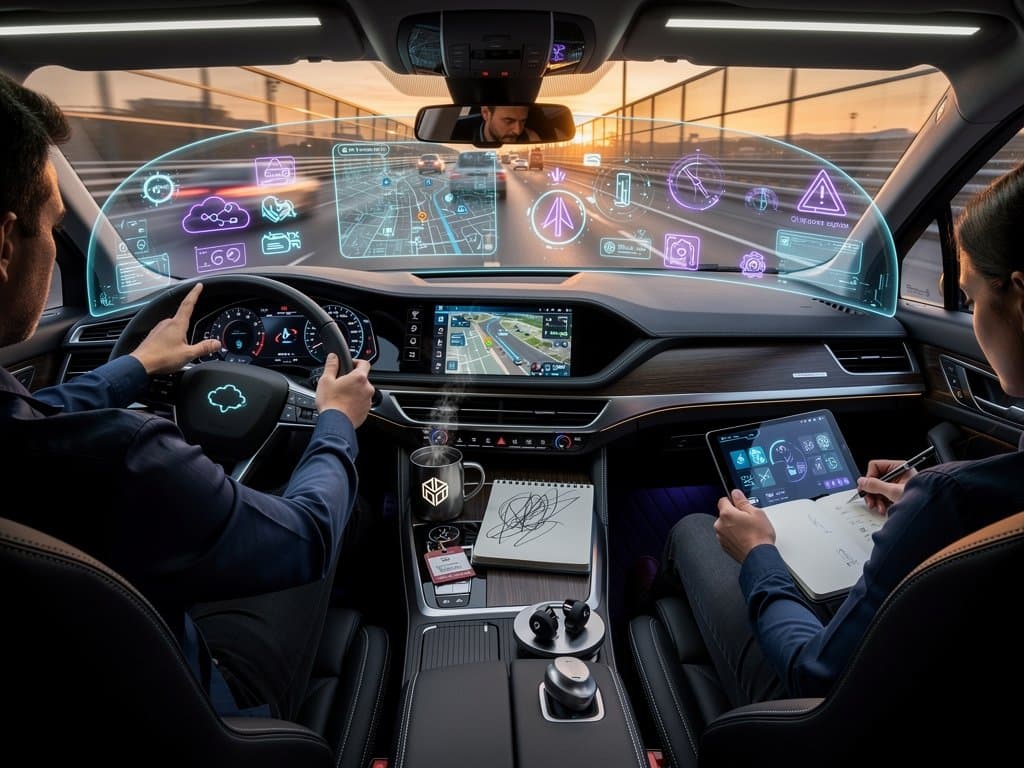
- Microsoft released 100 AI tools for AI vehicles on April 16, 2026.
- Gartner sees 40% cut in OEM development time.
- MSFT stock rose 2.1% to $452.30 USD post-launch.
Microsoft launched 100 AI tools for AI vehicles on April 16, 2026. Satya Nadella, Microsoft CEO, announced the suite at a virtual developer conference. The tools target cockpits, powertrains and telematics systems. Alex Johnson of Benzinga reported the details.
OEMs use the tools for scalable software stacks and real-time decisions. Edge computing supports low-latency inference on vehicle hardware.
Key Features of the AI Tools
Microsoft divides the tools into categories: 25 for cockpits, 30 for powertrains, 20 for telematics and 25 for V2X. Cockpit AI supports natural language voice controls. Powertrain modules predict failures from vibration data, per Microsoft documentation.
Mary Barker, Gartner automotive analyst, stated: "These tools cut development time by 40% for OEMs." Barker shared the forecast in a Gartner report dated April 15, 2026.
Telematics tools process 1TB of sensor data daily per vehicle. V2X features optimize traffic via 5G networks.
OEM Partnerships Drive Adoption
Microsoft offers Azure Automotive solutions. Ford uses Microsoft Sync, integrated since 2007. Jim Farley, Ford CEO, confirmed expansion in an April 16, 2026, earnings call.
GM deployed Azure for Super Cruise in 2021. Mary Barra, GM CEO, reported 15% efficiency gains in a March 2026 Reuters interview. BMW uses Microsoft AI for gesture controls. Oliver Zipse, BMW CEO, praised it at CES 2026.
Stellantis applies Azure for fleet management. Carlos Tavares, Stellantis CEO, reported 20% cost savings in Q1 2026 filings.
Integration Technical Details
Edge AI runs on Nvidia Orin chips with 10ms latency. Sensors feed data to Azure for retraining.
OTA updates deliver features weekly. Predictive maintenance flags issues 48 hours early.
Microsoft and Nvidia collaborate on AI platforms, per TechCrunch on November 15, 2023. Automakers train on datasets from 500 million km of driving.
Financial Market Impacts
Automotive software revenue reached $20 billion USD in 2026, per IDC analyst Rajesh Gupta. Gupta forecasts 25% CAGR to $65 billion USD by 2032. OEMs shift to subscriptions, lifting recurring revenue 35%.
Microsoft shares (MSFT) rose 2.1% to $452.30 USD on Nasdaq on April 16, 2026, per Yahoo Finance. Azure automotive bookings grew 18% year-over-year in Q2 filings.
Infotainment achieves 95% NLP query accuracy. Sensor fusion uses lidar, radar and cameras via APIs.
The Fear & Greed Index stood at 23 on April 16, 2026, per Alternative.me. Bitcoin traded at $75,097 USD, up 0.2% in 24 hours per CoinMarketCap.
Regulatory Compliance
U.S. NHTSA requires AI safety testing under FMVSS 208. Europe applies GDPR data rules. Microsoft tools comply with ISO 26262 ASIL-D.
China requires local data stacks. Microsoft partners with BAIC Group, per a February 2026 statement by BAIC CEO Chen Hong.
Key Competitors
Google Android Automotive OS equips 12 million vehicles. Apple CarPlay holds 80% market share. Nvidia DRIVE powers 25 OEM models.
Microsoft uses Azure cloud integration. Hybrid edge-cloud reduces costs 30%, per Forrester analyst Mike Gualtieri.
Expansion Outlook
V2X cuts congestion 22% by 2030, per IDTechEx. EV batteries gain 15% range via AI.
Microsoft Research prototypes monitor health. OEMs outsource 60% of software. Microsoft invests $5 billion USD in R&D through 2028.
Partnerships project 50% adoption by 2028, per McKinsey analyst Tom Leech.
Microsoft AI vehicles adoption accelerates with OEM integrations.
This article was generated with AI assistance and reviewed by automated editorial systems.