- MIT-IBM Lab launched for AI-quantum research on Oct. 10, 2024 (lab announcement).
- Bitcoin reached $76,574 USD with $1.534T market cap (CoinGecko, Oct. 10, 2024).
- Fear & Greed Index at 26 (Alternative.me, Oct. 10, 2024).
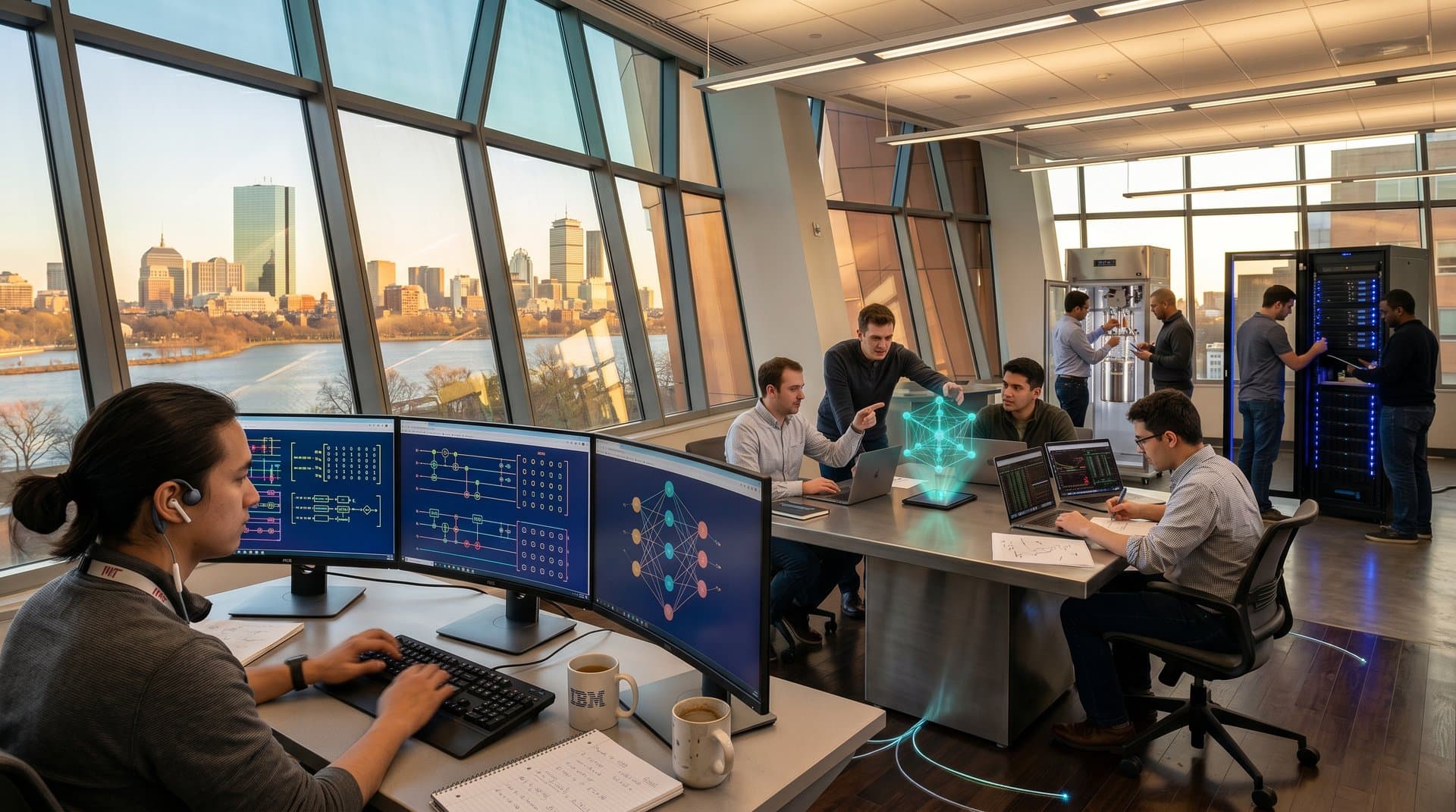
MIT and IBM launched the MIT-IBM Lab for artificial intelligence and quantum computing research on October 10, 2024, per the lab's announcement. The lab targets software optimization and machine learning applications for hybrid quantum-AI systems.
Bitcoin traded at $76,574 USD with a $1.534 trillion market cap on CoinGecko as of October 10, 2024. Ethereum reached $2,295 USD with a $277 billion market cap. The Crypto Fear & Greed Index registered 26, according to Alternative.me data.
IBM and MIT Leaders Provide Expertise
IBM contributes quantum hardware, stated Jay Gambetta, IBM Fellow and VP of IBM Quantum, in a company release dated October 9, 2024. MIT provides quantum information science theory, per William Oliver, director of MIT Quantum Engineering.
The lab develops hybrid systems where quantum processors accelerate AI training. Researchers focus on optimization problems beyond classical computer limits.
Quantum algorithms deliver speedups for specific tasks, Gambetta noted.
Quantum-Enhanced Machine Learning
The lab builds quantum neural networks that integrate quantum circuits with TensorFlow, per MIT Quantum Engineering. Quantum approximate optimization algorithms (QAOA) tackle gradient descent issues in large models.
IBM's quantum roadmap targets scalable qubits by 2025, per Gambetta's roadmap update. Financial uses include multi-asset portfolio optimization.
IBM Quantum Computing research details these topics.
Quantum Applications in Finance and Software
Quantum systems solve NP-hard problems such as supply chain routing. The lab tests variational quantum eigensolvers for edge device software.
IBM Quantum System Two operates over 100 qubits, company specifications confirm. MIT researchers design noise-resilient algorithms.
Cybersecurity gains traction. Quantum threats challenge elliptic curve cryptography in blockchains. Post-quantum options like lattice-based cryptography advance.
Bitcoin employs ECDSA signatures at risk. Ethereum developers monitor upgrades, per Vitalik Buterin in a September 2024 blog post.
Crypto Market Snapshot on Launch Day
- Asset: BTC · Price (USD): 76,574 · 24h Change: +0.6% · Market Cap: $1,534.2B
- Asset: ETH · Price (USD): 2,295 · 24h Change: +0.9% · Market Cap: $277.1B
- Asset: USDT · Price (USD): 1.00 · 24h Change: 0.0% · Market Cap: $189.7B
- Asset: XRP · Price (USD): 1.37 · 24h Change: -0.3% · Market Cap: $84.6B
- Asset: SOL · Price (USD): 83.78 · 24h Change: +0.5% · Market Cap: $48.3B
CoinGecko tracked data as of October 10, 2024.
Broader Financial Market Ties
AI powers high-frequency trading platforms. Quantum refines risk models at banks including Goldman Sachs, per a September 2024 firm report.
Spot Bitcoin ETFs amassed $20 billion USD in assets since January 2024 SEC approvals. Quantum-secure wallets emerge to counter risks.
Europe's MiCA rules mandate quantum readiness by 2026. The US SEC examines AI trading tools.
MIT-IBM Watson AI Lab lists prior projects. The MIT-IBM Lab builds on AI-quantum integration.
Quantum advantage hinges on error correction progress. Financial markets track scalable systems from the MIT-IBM Lab.
Frequently Asked Questions
What is the MIT-IBM Lab?
MIT and IBM launched the lab for AI and quantum computing research on Oct. 10, 2024, per announcement. Focus areas: software optimization, machine learning. IBM handles hardware; MIT theory.
How does the lab advance machine learning?
Quantum-enhanced neural networks and QAOA optimize models, per IBM's Jay Gambetta and MIT sites. Benefits financial trading with faster computations.
What quantum risks affect crypto?
Quantum threats target Bitcoin's ECDSA, per IBM research. Post-quantum cryptography like lattice schemes advances. Ethereum's Vitalik Buterin tracks upgrades.
Why emphasize software optimization?
Quantum solves NP-hard problems for AI and finance, per lab focus and Gambetta. Supports edge computing, portfolio allocation.