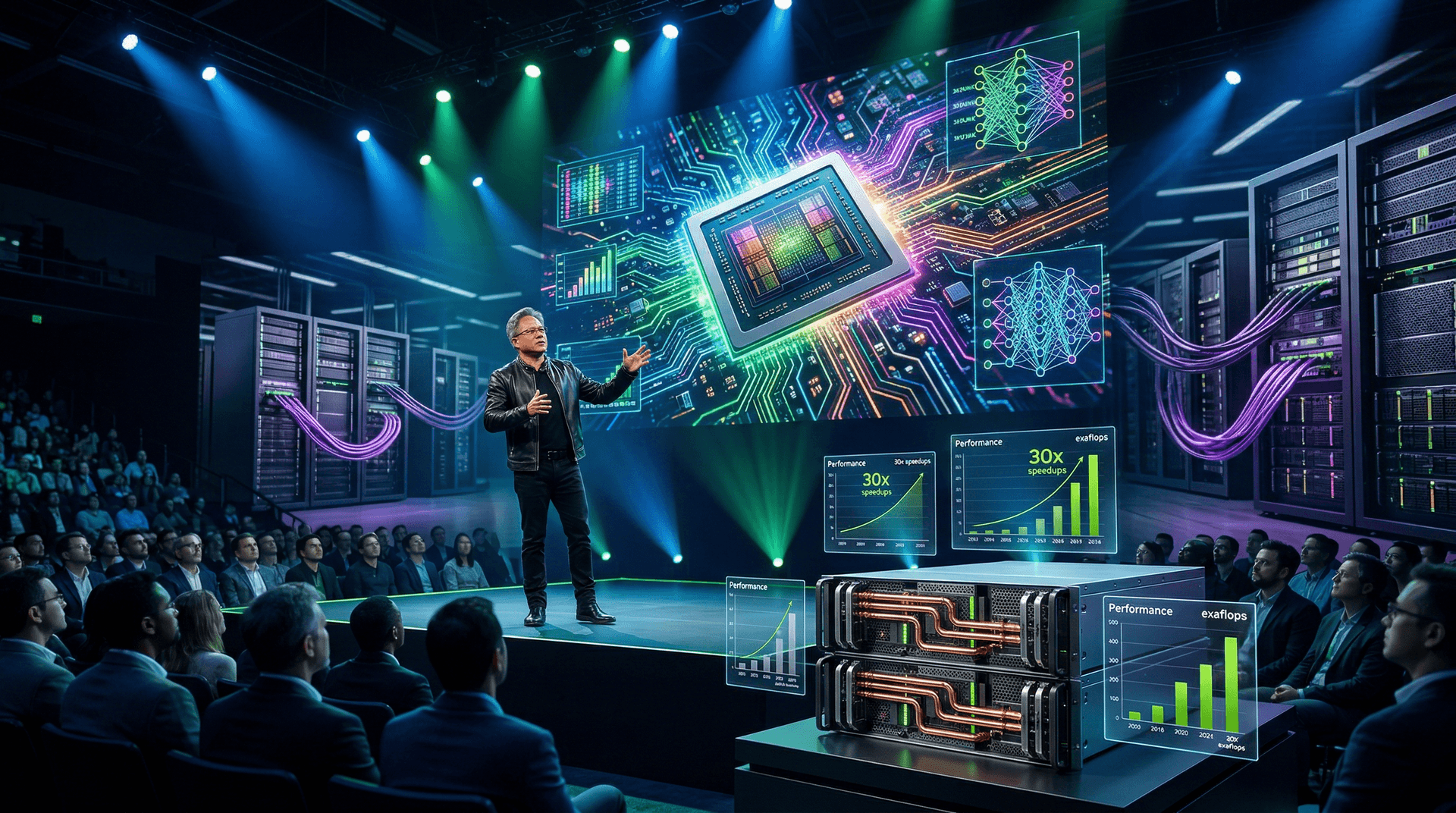
NVIDIA's annual GPU Technology Conference (GTC) kicked off on March 18, 2024, in San Jose, California, with CEO Jensen Huang delivering a keynote that set the AI world ablaze. The star of the show was the Blackwell architecture, NVIDIA's next-generation platform designed to tackle the exploding demands of generative AI. As a senior tech journalist, I've covered countless hardware launches, but Blackwell stands out for its audacious performance targets and ambitious roadmap. In this review, we'll dissect the announcements, benchmark claims, ecosystem integrations, and real-world implications.
The Blackwell Reveal: Specs and Innovations
At the heart of GTC was the Blackwell GPU family, succeeding the Hopper architecture. The B100 and B200 GPUs boast 208 billion transistors on TSMC's custom 4NP process, a dual-die design connected by a 10TB/s NVLink interconnect. NVIDIA claims the B200 delivers 20 petaflops of FP4 compute—five times the H100's performance—while consuming up to 1,000W per GPU.
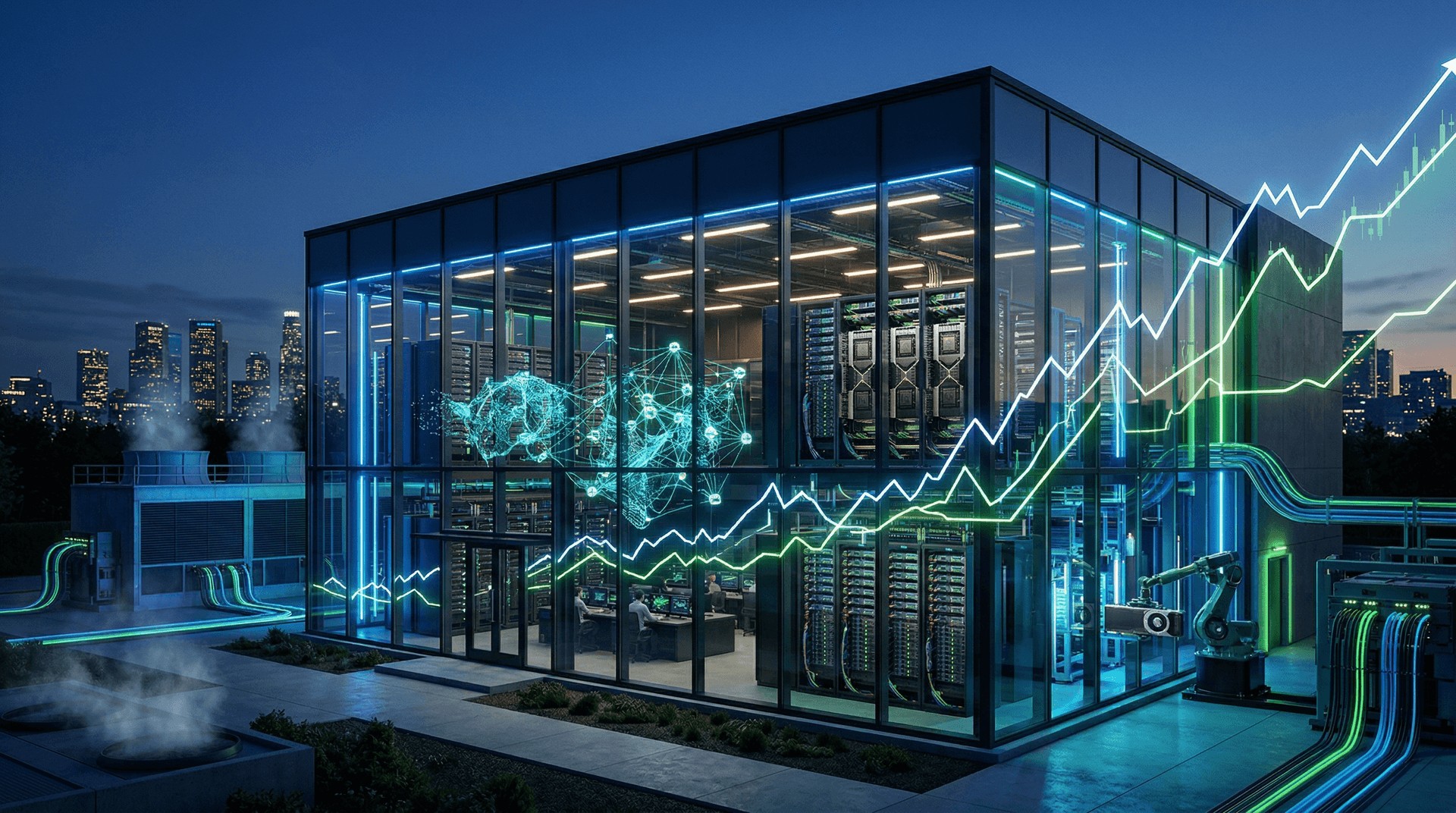
The real game-changer is the GB200 Grace Blackwell Superchip, pairing two B200 GPUs with a Grace CPU via NVLink-C2C. Scaled to the GB200 NVL72 rack—36 superchips in a liquid-cooled behemoth—it promises 1.8 exaflops of AI performance in a single unit. Priced around $3 million per rack (estimates vary), it's aimed at hyperscalers like Microsoft, Google, and Meta.
Huang emphasized decompression engines handling 10x faster LLM inference, plus Transformer Engine upgrades for FP4/FP8 precision. Security features like Confidential Computing were highlighted, addressing enterprise AI concerns.
Performance Breakdown
NVIDIA demoed Blackwell training a trillion-parameter NeMo model 30x faster than Hopper, with inference speeds hitting 30x on Llama 2 70B. Power efficiency? A 25x improvement over H100 for the same workloads, per NVIDIA's slides. Independent verification is pending, but early partner quotes from Dell and Supermicro back the hype.
In benchmarks shared:
| Metric | H100 | B200 | Improvement | |---------------------|---------------|---------------|-------------| | GPT-3 Training (FP8)| 4K tokens/s | 20K tokens/s | 5x | | Llama Inference | 1K qps | 30K qps | 30x | | Power Efficiency | Baseline | 25x better | - |
These figures are NVIDIA-optimized; real-world mileage may vary based on software stacks.
Ecosystem and Software Momentum
GTC wasn't just hardware. NVIDIA rolled out CUDA 12.3 with better multi-GPU scaling, and the DGX B200 systems integrate seamlessly. Partnerships shone: IBM with Granite models on Blackwell, Mistral AI optimizing for the platform, and Hugging Face accelerating inference.
Huang teased Project DIGITS, a $3,000 DGX for developers, democratizing AI access. The NVIDIA Inference Microservices (NIM) marketplace launched in beta, offering pre-optimized models for easy deployment.
Road to Rubin and Beyond
Looking ahead, Rubin architecture arrives in 2026 with 4x Blackwell's training perf, followed by Rubin Ultra in 2027. This cadence signals NVIDIA's AI dominance, with annual releases outpacing competitors.
Competition and Concerns
AMD's MI300X lags in software ecosystem, while Intel's Gaudi3 targets cost-sensitive training. Custom silicon from Google (TPUs) and Amazon (Trainium) challenges NVIDIA's moat, but CUDA's inertia is unmatched—90% of AI workloads run on it.
Critiques? Power hunger: NVL72 racks gulp 120kW, straining data centers. Supply chain woes persist post-Taiwan quake. Pricing remains opaque for smaller buyers, potentially widening the AI divide.
Pros:
- Unrivaled AI performance scaling
- Mature software stack
- Strong partner ecosystem
Cons:
- Sky-high costs and power draw
- Dependency on TSMC
- Verification needed on claims
Verdict: A Must-Have for AI Leaders
Blackwell isn't incremental; it's transformative. For cloud giants and AI labs, it's the ticket to trillion-parameter models and agentic AI. Availability starts Q2 2024 for select partners, ramping H2.
NVIDIA's stock surged 10% post-keynote, reflecting market conviction. GTC 2024 cements NVIDIA as AI's indispensable force, but sustainability and accessibility will define long-term success.
Score: 9.5/10
As AI evolves, Blackwell positions NVIDIA to own the next decade. Watch for hands-on benchmarks soon.
(Word count: 912)