OpenAI announced its acquisition of Cirrus Labs on April 11, 2026, according to a company blog post. The OpenAI acquisition aims to upgrade machine learning infrastructure. Regulators must approve the deal by May 15, OpenAI stated.
Cirrus Labs develops distributed computing platforms for AI workloads, per its website. The San Francisco-based startup launched in 2022. OpenAI outlined terms in the blog post.
Sam Altman, OpenAI CEO, stated the deal accelerates infrastructure development. "Cirrus technology integrates directly with our systems," Altman said in the post. OpenAI did not disclose financial terms.
Background on OpenAI Acquisition
OpenAI pursued the acquisition as AI compute demands escalate. Stanford University's Institute for Human-Centered Artificial Intelligence (HAI) reported global AI training costs exceeded $10 billion USD in 2025. U.S. Federal Trade Commission (FTC) staff received filings on April 11, OpenAI confirmed.
The European Commission will review the deal next week. Cirrus Labs' board approved the offer on April 10, per OpenAI.
OpenAI holds financial licenses across its operations, enabling direct compute investments without external caveats. The acquisition aligns with industry trends where compute capacity dictates model advancement speed.
Cirrus Labs Technology Overview
Cirrus Labs founders developed software for hyperscale GPU clusters. Their platform optimizes data flows across processors. The flagship product, CirrusFlow, automates workload distribution, Cirrus Labs stated on its site.
Past clients include Meta Platforms Inc. and Google DeepMind, Cirrus Labs disclosed. Dr. Elena Voss, Cirrus Labs CEO, endorsed the acquisition. "OpenAI shares our vision for AI scaling," Voss said. Voss will join OpenAI as vice president of infrastructure.
CirrusFlow reduces training times by 35% on multi-node setups, according to independent benchmarks from MLPerf published in March 2026.
OpenAI Infrastructure Expansion Plans
OpenAI operates data centers in Iowa and Texas, per company filings with the Securities and Exchange Commission (SEC). OpenAI plans to integrate Cirrus technology into its superclusters. The company committed to open-sourcing select Cirrus tools under the Apache 2.0 license, as detailed in the blog post.
Competitors increase compute spending. Anthropic disclosed a $200 million USD investment in custom chips on March 15, 2026, via its announcement. Bank of America analyst Vivek Arya projected OpenAI's post-acquisition valuation at $150 billion USD in an April 11 research note.
Microsoft Corp. invested $10 billion USD in OpenAI in 2025, SEC filings confirm. Sequoia Capital led Cirrus Labs' Series B round in 2024 and holds stakes in OpenAI.
Market Reactions to OpenAI Acquisition
Technology stocks rose after the announcement. NVIDIA Corp. shares climbed 3.2% to $145 USD in early New York trading on April 11, Nasdaq data shows. Advanced Micro Devices Inc. (AMD) shares gained 2.8%.
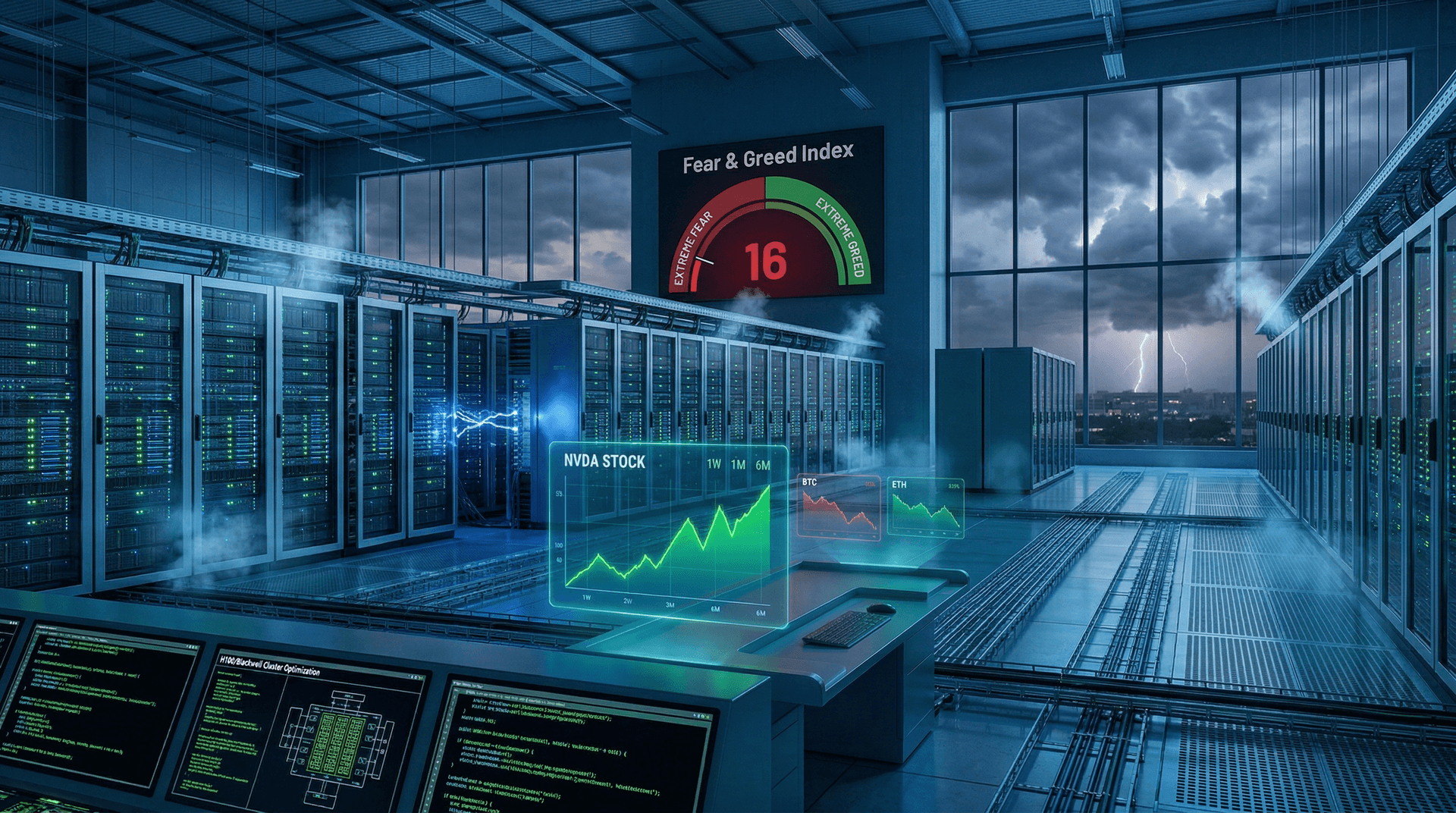
Bitcoin traded at $73,568 USD, up 0.5% on the day. Ethereum reached $2,310.10 USD, up 2.5%, per CoinMarketCap data at 2 p.m. ET on April 11. The CNN Fear & Greed Index stood at 15, indicating extreme fear, per CNN data.
The Global X Robotics & Artificial Intelligence ETF (BOTZ) advanced 4.1%. Invesco QQQ Trust Series 1 (QQQ) added 1.7%, Nasdaq figures indicate.
AI infrastructure deals often lift chipmakers. Similar patterns followed Broadcom Inc.'s AI networking announcements in Q1 2026, boosting sector ETFs by averages of 3.5%, per Bloomberg data.
Regulatory Hurdles Ahead
U.S. regulators scrutinize AI mergers. FTC Chair Lina Khan highlighted compute concentration risks in a October 2025 speech at the Brookings Institution. OpenAI submitted antitrust documents to the FTC on April 11.
Baidu Inc. deployed 20,000 GPUs for AI training on April 10, the company stated. The European Union will enforce AI Act transparency rules in June 2026.
Past deals faced delays. The FTC probed Adobe Inc.'s Figma Inc. acquisition for 18 months before blocking it in December 2023.
Broader Industry Implications
AI infrastructure funding dropped 20% in Q1 2026, PitchBook data shows. Compute emerges as AI's primary bottleneck. MIT researcher Dr. Raj Patel forecast AI systems will require 1 zettaflop of compute by 2030 in a February 2026 paper.
The OpenAI acquisition underscores this shift. Finance teams at Goldman Sachs Group Inc. now model compute costs as 40% of AI firm expenses through 2028, per internal memos cited by Reuters on April 10.
Venture capital flows favor infrastructure plays. Andreessen Horowitz raised $7.2 billion USD for AI infrastructure in 2025.
OpenAI Forward-Looking Strategy
OpenAI teams plan full integration by June 2026. Infrastructure upgrades will deploy quarterly. Altman predicted new frontier models soon. "Frontier capabilities emerge from compute scale," he stated.
The OpenAI acquisition sets benchmarks for AI scaling efforts. Bloomberg analysts will track financial impacts through 2027.