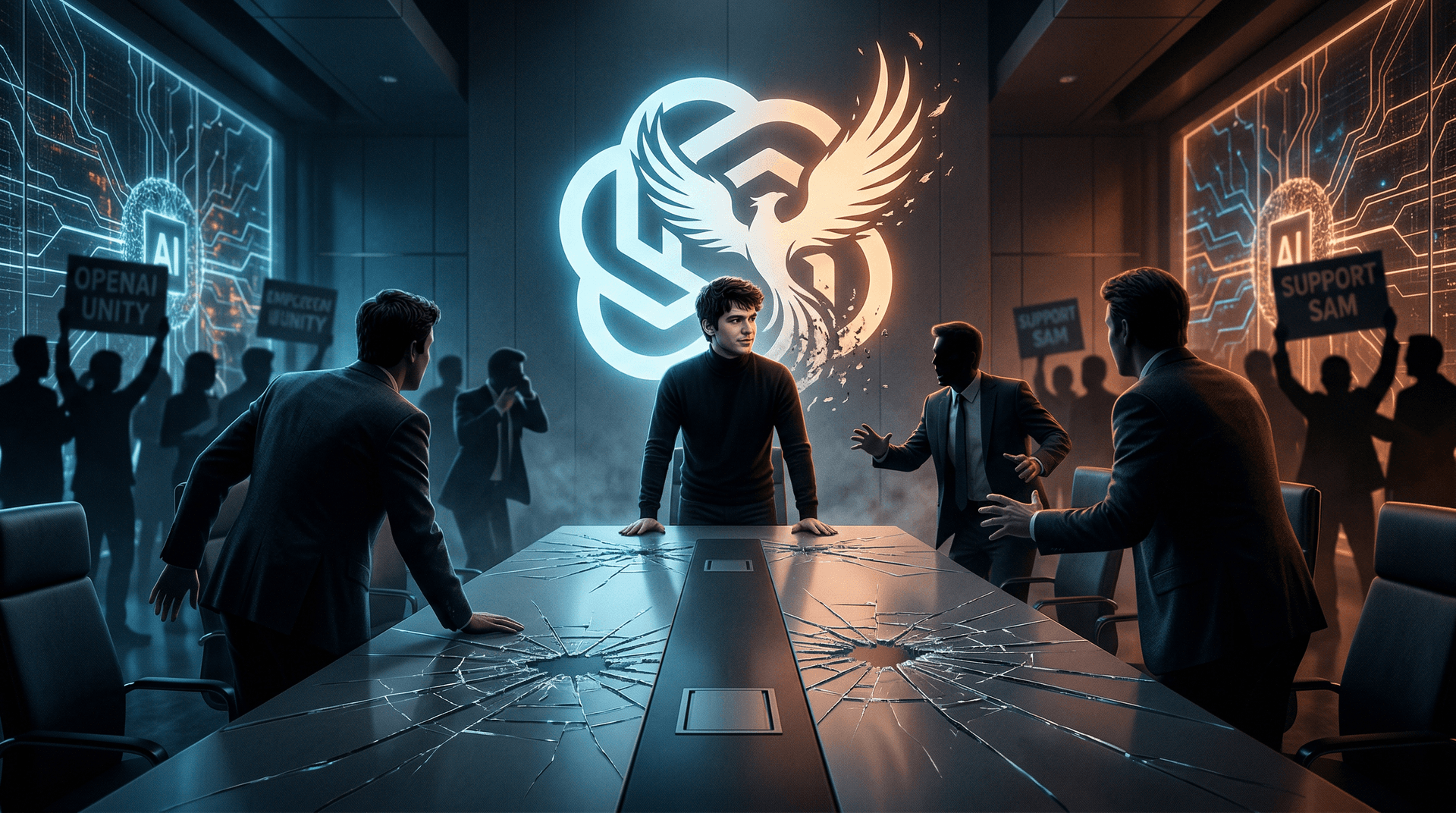
In one of the most jaw-dropping corporate dramas in tech history, OpenAI's board of directors abruptly fired CEO Sam Altman on Friday, November 17, 2023, citing a lack of "candor in communications." Just 48 hours later, by Sunday evening, the company announced Altman's return as CEO, alongside President Greg Brockman, with a restructured board. This whirlwind saga has sent shockwaves through the AI startup ecosystem, raising questions about governance, power dynamics, and the future of the ChatGPT maker.
The Firing: A Bolt from the Blue
OpenAI, the Microsoft-backed darling of the generative AI boom, stunned the world when its nonprofit board announced Altman's removal. The official statement was terse: "Mr. Altman’s departure follows a deliberative review process by the board, which concluded that he was not consistently candid in his communications." No further details were provided, fueling immediate speculation.
Altman, the 38-year-old wunderkind who co-founded OpenAI in 2015 as a nonprofit to ensure artificial general intelligence (AGI) benefits humanity, had transformed it into a capped-profit powerhouse. Under his leadership, ChatGPT launched in November 2022, catapulting the company to a $86 billion valuation in recent funding talks and attracting billions from investors like Microsoft.
The board, composed of independent figures including Ilya Sutskever (OpenAI's chief scientist), lacked technical experts or major investors, a structure rooted in OpenAI's unique hybrid model. This setup, intended to prioritize safety over profit, apparently clashed with Altman's aggressive commercialization push.
Employee Revolt and Microsoft Muscle
The backlash was swift. Hours after the firing, Greg Brockman, OpenAI's co-founder and president, resigned in protest after being removed from the board. By Friday evening, nearly the entire OpenAI workforce—over 700 employees—signed an open letter to the board, threatening mass resignation if Altman wasn't reinstated. "You are compromising the OpenAI we love," they wrote, pledging allegiance to Altman.
Microsoft, OpenAI's largest investor with over $13 billion committed, entered the fray. CEO Satya Nadella voiced concerns on X (formerly Twitter), and reports emerged that Altman was in discussions to join Microsoft directly, potentially taking key talent. This "talent poaching" threat amplified pressure on the board.
Mira Murati, OpenAI's CTO, served as interim CEO, but her tenure lasted less than two days. On Saturday, she reportedly expressed interest in Altman's return before retracting amid board tensions.
Reinstatement and New Board
By Sunday, November 19, OpenAI revealed a path forward. Altman would resume as CEO, Brockman as president. The board would be overhauled: Sutskever stepped down, and new members were to be named, including non-profit experts but excluding Altman and Brockman initially. Microsoft observer Bret Taylor would chair the new board.
In a blog post, OpenAI stated: "We have reached an agreement in principle for Sam to return to OpenAI as CEO... We are committed to our mission of ensuring AGI benefits all of humanity." Altman tweeted his excitement: "We have a lot to do. Love u all." The resolution averted a talent exodus that could have crippled the company.
Roots of the Conflict
Insiders point to simmering tensions over OpenAI's direction. The board, influenced by safety advocates like Sutskever, worried Altman was prioritizing speed and profits over AGI safeguards. Recent moves, like turning down a $97 billion acquisition offer from Apple (rumored) and pushing for a full for-profit pivot, exacerbated rifts.
OpenAI's structure—nonprofit controlling a for-profit arm—created governance headaches. Critics argue it stifled growth, while supporters say it prevented shareholder takeovers. Altman's ouster exposed these frailties.
Industry Ripples
The episode reverberates across AI startups. Competitors like Anthropic and xAI (Elon Musk's venture, which just unveiled Grok) watched closely. Investors now scrutinize governance in high-stakes AI firms. "This is a wake-up call for boards in mission-driven startups," said one VC anonymously.
Microsoft's role underscores Big Tech's sway over startups. With Azure powering OpenAI, Nadella holds leverage. The drama boosted Microsoft's stock briefly, as markets bet on Altman landing there.
Funding implications loom large. OpenAI was eyeing a tender offer valuing it at $86-90 billion. Will investors demand changes? Other startups, flush with AI cash—Hugging Face, Perplexity—may rethink board compositions.
What Lies Ahead for OpenAI?
Altman returns stronger, but scars remain. Safety concerns persist; Sutskever's exit raises questions about research priorities. The new board must balance innovation with oversight.
OpenAI's products—GPT-4o wait, no, up to GPT-4—continue dominating. Enterprise deals with PwC, Salesforce grow revenue. Yet, regulatory scrutiny from the EU and US intensifies.
This saga cements Altman's legend while highlighting AI's high-wire act. In the race to AGI, startups must navigate not just code, but human frailties. OpenAI endures, but forever changed.
CSN News will monitor developments. Word count: 912