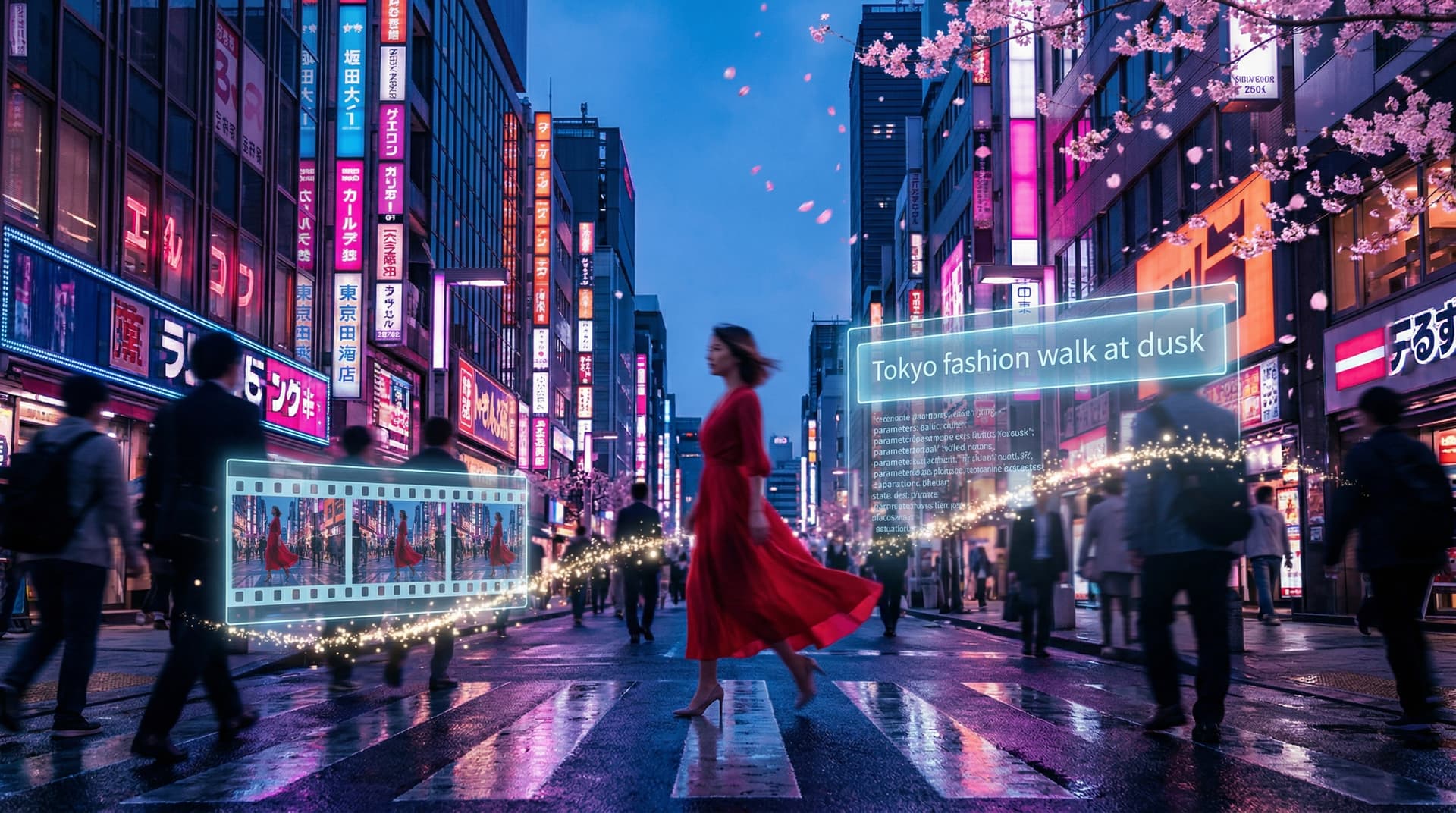
On February 15, 2024, OpenAI dropped a bombshell in the AI world with the announcement of Sora, a groundbreaking text-to-video generation model. Capable of producing highly realistic videos up to 60 seconds long from simple text descriptions, Sora represents the latest pinnacle in generative AI technology. While not yet publicly available, the stunning demo videos shared by OpenAI have ignited widespread awe, debate, and speculation about the future of video creation.
What is Sora?
Sora builds on OpenAI's previous successes with DALL-E for images and ChatGPT for text, extending diffusion models into the temporal dimension of video. Trained on vast datasets of publicly available internet videos and licensed content, Sora "understands" not just static scenes but motion, physics, and complex interactions. OpenAI describes it as a "world simulator," able to generate consistent visuals across frames while maintaining narrative coherence.
Key capabilities include:
- High fidelity: Videos rival professionally shot footage in realism, with accurate lighting, shadows, reflections, and human expressions.
- Duration and aspect ratios: Up to 1-minute clips in widescreen, vertical, or square formats.
- Extensions: Can extend existing videos, fill in frames (inpainting/outpainting), or remix footage.
- Creative control: Supports detailed prompts like "A stylish woman walks down a Tokyo street..." yielding intricate, cinematic results.
Jaw-Dropping Demos
The announcement page featured a gallery of clips that left viewers speechless. Highlights include:
- A woolly mammoth trudging through snowy mountains, fur rippling realistically in the wind.
- Aerial footage of Tokyo at dusk, cherry blossoms fluttering amid neon lights and bustling crowds.
- An animated pirate ship battling a kraken in stormy seas, waves crashing with perfect physics.
- A woman in a red dress pirouetting on a catwalk runway, fabric flowing naturally.
These aren't choppy animations or uncanny CGI; they exhibit spatial awareness, persistent objects, and adherence to real-world dynamics—challenges that plagued earlier models like Meta's Make-A-Video or Google's Imagen Video.
OpenAI shared that Sora excels at "following the rules of the world," simulating gravity, reflections, and even emotional expressions on faces. However, imperfections persist: occasional morphing objects, inconsistent physics in complex scenes, or struggles with precise human movements like hand gestures.
Technical Underpinnings
At its core, Sora uses a video diffusion transformer architecture, scaling transformer-based models (like GPT) to handle spatiotemporal patches. Instead of generating videos token-by-token sequentially, it predicts an entire video latent representation simultaneously, compressed into manageable chunks.
This approach, detailed in OpenAI's research preview, allows for longer, higher-quality outputs. Training involved hundreds of millions of video clips, filtered for quality and safety. Compute demands are immense—likely leveraging Microsoft's Azure supercomputers, given their partnership.
Sora also integrates with DALL-E 3 for image-to-video, enabling storyboarding from static prompts. Resolution tops out at 1080p, with potential for higher in future iterations.
Safety and Ethical Concerns
OpenAI isn't rushing release. Sora remains in a "red teaming" phase, where experts probe for risks. Watermarks will embed C2PA metadata in outputs, and visible identifiers like invisible pixels detect AI-generated content.
Chief concerns:
- Deepfakes: Hyper-realistic videos could fuel misinformation, especially in elections.
- Copyright: Trained on public data, but outputs might mimic specific styles or infringe IP.
- Bias: Reflects training data skews, potentially amplifying stereotypes.
OpenAI plans phased rollout: first to trusted users, then via ChatGPT Plus/Teams. Safety classifiers will block harmful prompts, building on DALL-E's guardrails.
Industry Implications
Sora disrupts Hollywood, advertising, and social media. Indie creators could produce blockbuster visuals affordably, but fears loom for VFX artists and actors. "This will change storytelling," said one filmmaker, while unions warn of job losses.
Competition heats up:
- Runway ML and Pika Labs offer similar tools, but shorter/lower quality.
- Stability AI's Stable Video Diffusion lags in realism.
- Google and Meta trail publicly, though internal projects like Lumiere exist.
Nvidia benefits immensely, as its GPUs power these models. Stock rose post-announcement, underscoring AI hardware's boom.
OpenAI's Vision and Road Ahead
CEO Sam Altman tweeted excitement: "We are blown away... working hard on safety." Chief product officer Kevin Weil emphasized iterative improvements.
Sora hints at multimodal AGI: combining text, image, video, audio. OpenAI eyes real-time video gen and longer formats, potentially revolutionizing education, therapy, and VR.
Critics question hype—demos are cherry-picked, and full model undisclosed. Yet, Sora cements OpenAI's lead, pressuring rivals to accelerate.
Conclusion
February's Sora reveal accelerates AI's march into creative domains, blending wonder with caution. As access expands, society must adapt—balancing innovation with safeguards. OpenAI's bet: responsible scaling unlocks unprecedented tools. Watch this space; video AI is just beginning.
CSN News, February 28, 2024
(Word count: 912)