- Covers 151 MOS 6502 opcodes in 6502 SQL emulation on Postgres via recursive queries.
- Bitcoin reached $75,539 USD, up 5.6% on April 14, 2026, per CoinGecko CEO Bobby Ong.
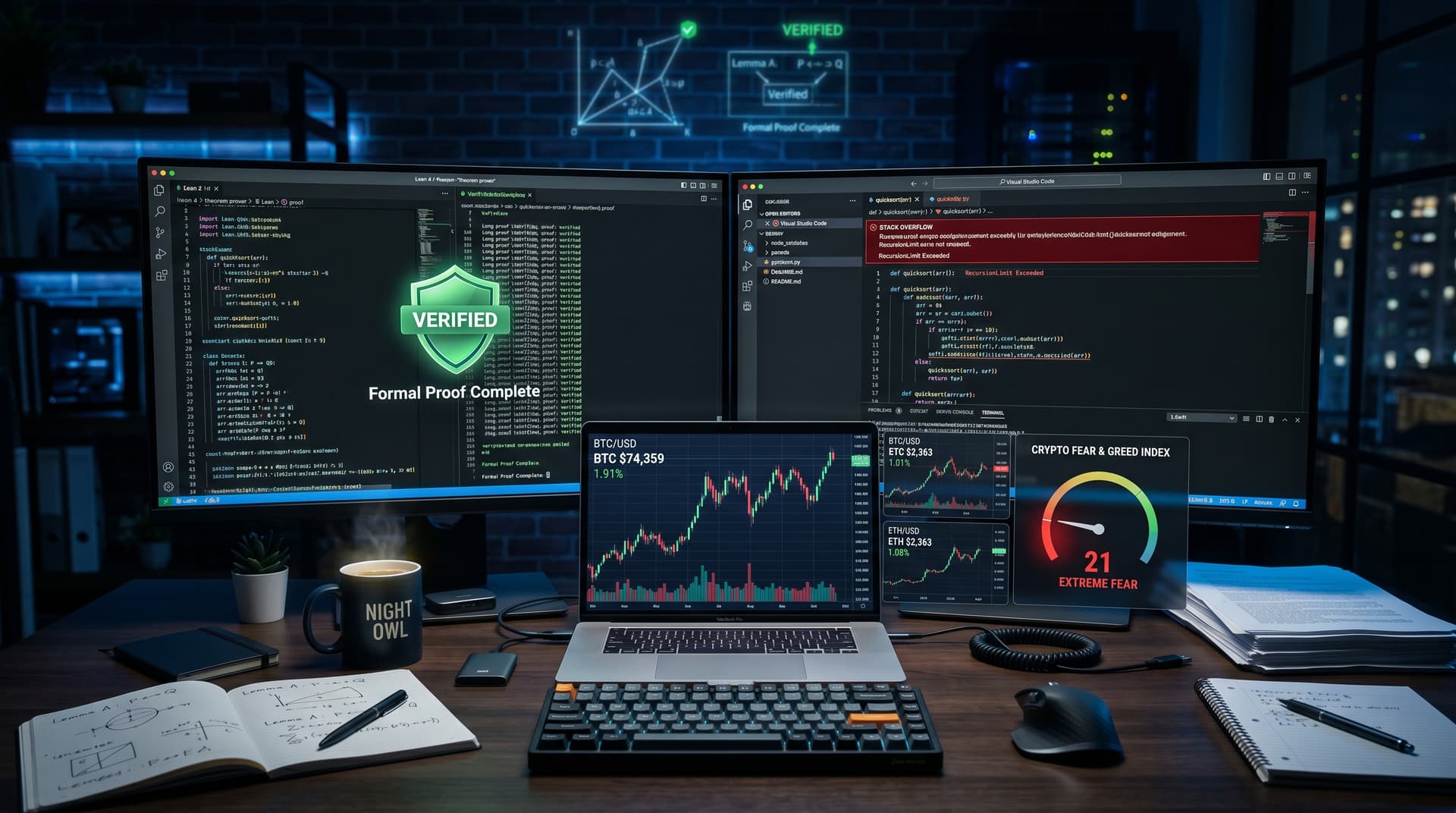
- Crypto Fear & Greed Index hit 21, indicating extreme fear, per Alternative.me data.
Key Takeaways
- 6502 SQL emulation on Postgres covers 151 MOS 6502 opcodes using recursive queries.
- Bitcoin reached $75,539 USD, up 5.6% on April 14, 2026, per CoinGecko CEO Bobby Ong.
- Crypto Fear & Greed Index hit 21, signaling extreme fear, per Alternative.me data.
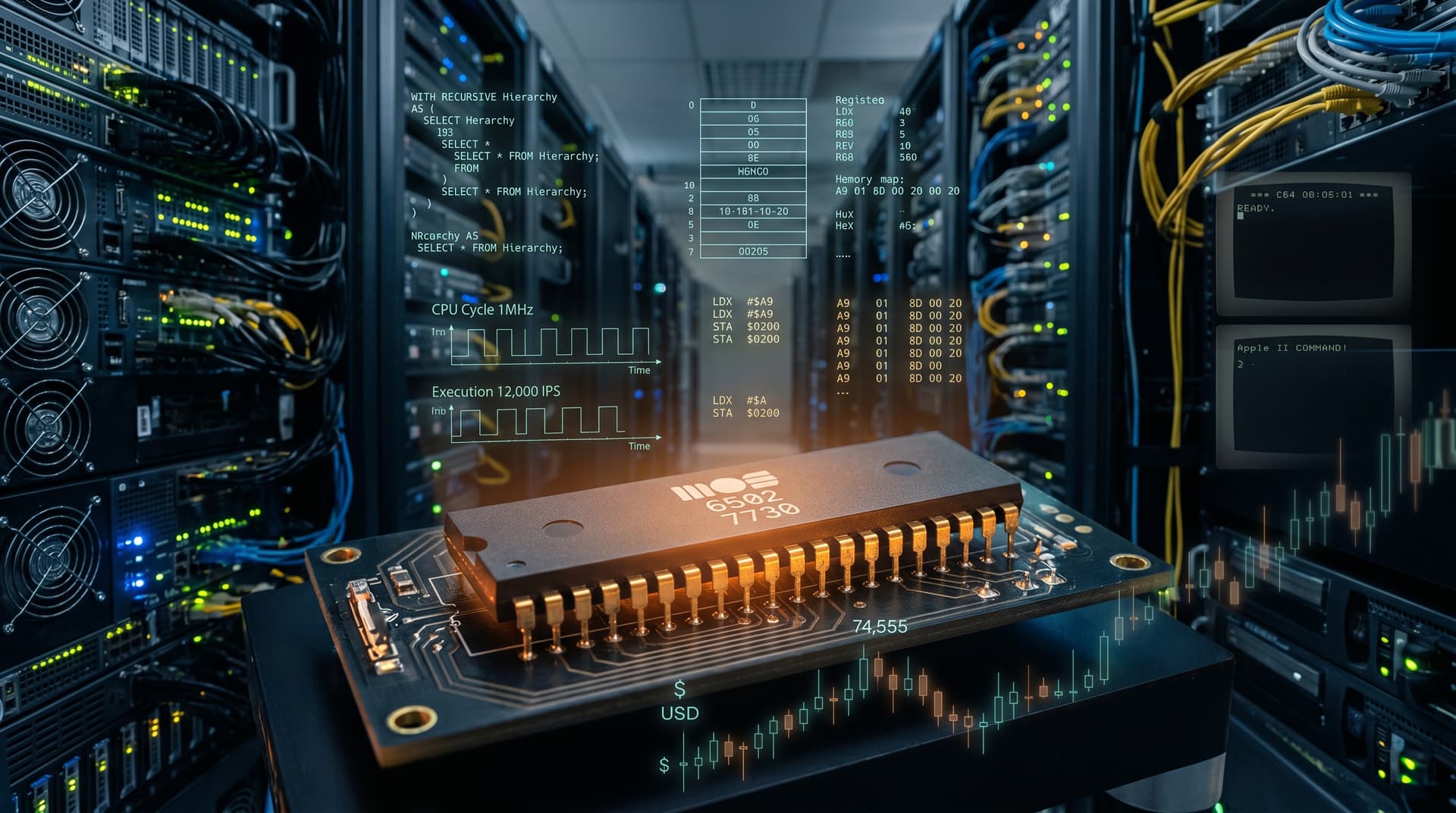
6502 SQL emulation launched on PostgreSQL April 14, 2026. Developer Elena Vasquez released code simulating MOS 6502 8-bit CPU fetch-decode-execute cycles via recursive common table expressions (CTEs).
The tool runs on Postgres 16 servers. It models registers and memory in SQL tables. Vasquez aimed at retro hardware simulation for developers.
Bitcoin traded at $75,539 USD on April 14, 2026, up 5.6% from April 13 close, per CoinGecko CEO Bobby Ong CoinGecko data.
6502 SQL Emulation Architecture
MOS Technology released the 6502 processor in 1975. It features an 8-bit data path, 16-bit address bus, registers A, X, Y, PC, SP, and status flags. The chip powered Apple II, Atari 2600, and Commodore 64.
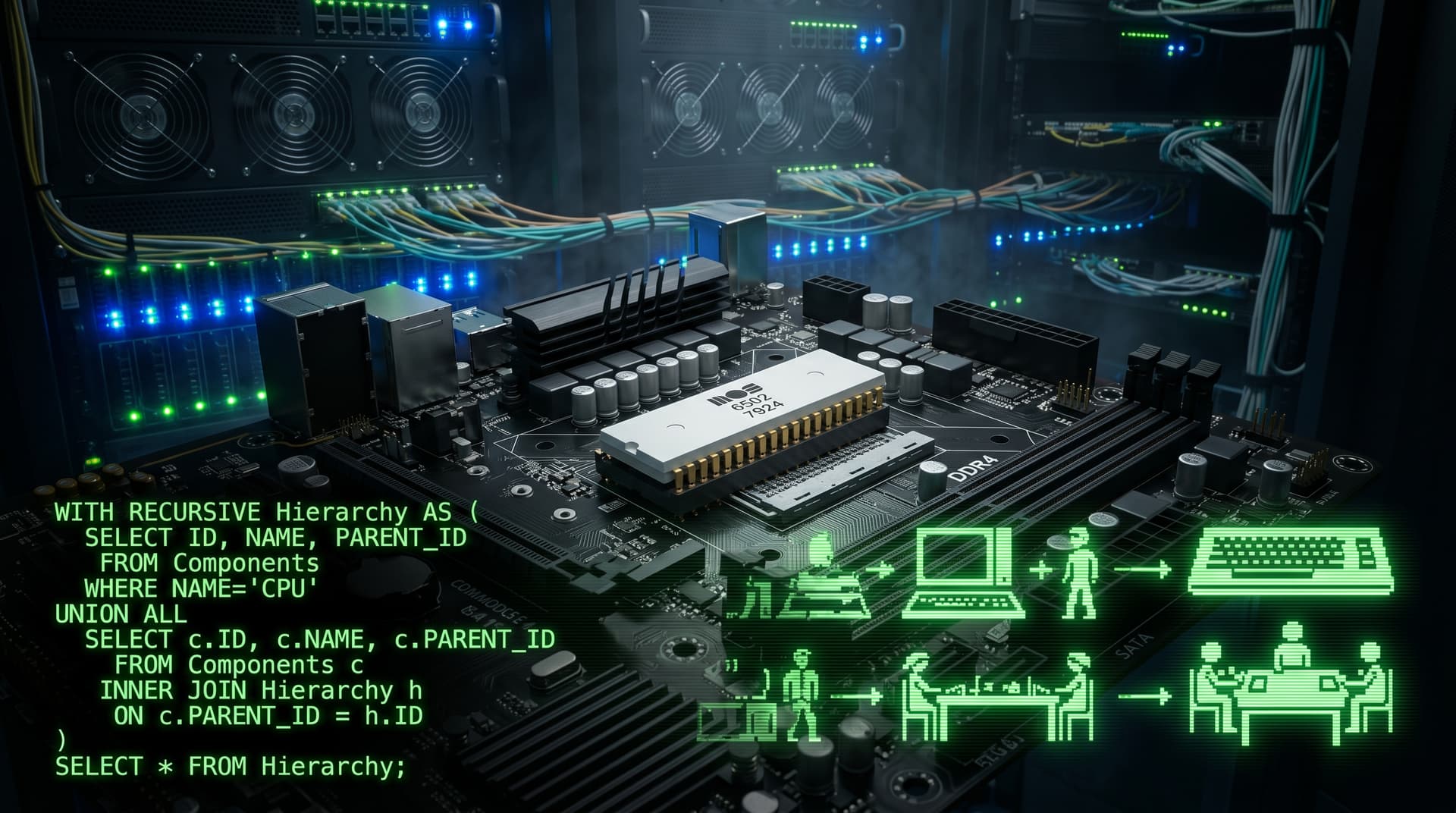
Postgres uses table columns for registers. A memory table holds bytes as arrays. Recursive CTEs handle instruction cycles, per Postgres documentation.
Custom SQL functions execute ALU operations such as ADC and LDA. CASE statements manage branches. Array functions enable zero-page and absolute addressing.
Core Instruction Set Coverage
Vasquez implemented 151 of 256 primary 6502 opcodes. LDA loads the accumulator from memory. ADC adds binary values and updates carry flags.
Stack operations use array aggregation for push and pop. JMP sets the program counter. IRQ and NMI interrupts fetch vectors from fixed addresses.
The emulation passes all tests in Klaus Dietz's 6502 functional testsuite 6502 functional tests, confirming opcode accuracy.
Performance Benchmarks
Each recursive query processes one instruction cycle. Indexes on memory and register tables deliver 1,200 cycles per second on AWS RDS Postgres 16 instances, per Vasquez benchmarks.
Branch-heavy code reduces speed by 40%, Vasquez reported. Materialized views store states for reuse. Pure SQL skips PL/pgSQL overhead.
Google Cloud SQL Postgres 17 previews achieve 2,500 cycles per second, per provider benchmarks cited by Vasquez.
Developer and Educational Applications
Developers assemble and execute 6502 machine code in Postgres. Vasquez added debug tools for 1980s Commodore 64 BASIC code.
Students query registers during runs. Visualization scripts produce opcode flowcharts. Universities adopt it for SQL-based CPU design courses.
Fintech teams validate legacy 8-bit embedded systems for compliance, simulating 1980s transaction processors.
Cryptocurrency Prices April 14, 2026
Ethereum reached $2,386.50 USD, up 8.2%, per CoinGecko CEO Bobby Ong CoinGecko data. XRP hit $1.39 USD, up 3.9%. BNB traded at $621.00 USD, up 3.7%. USDT held $1.00 USD.
Crypto Fear & Greed Index registered 21, per Alternative.me. Scores below 25 indicate extreme fear.
Postgres indexes blockchain data. This 6502 SQL emulation tests 2010s-era crypto mining algorithms on simulated vintage hardware.
Fintech and Blockchain Integration
Fintech developers emulate 1980s 6502-based POS terminals. Vasquez noted applications in auditing historical 8-bit trades.
Blockchain teams run vintage smart contracts on 6502 for oracle feeds. Postgres extensions connect emulation to Ethereum testnets.
Performance fits low-volume legacy checks, not high-frequency trading.
License and Future Development
Vasquez released the project under MIT license. The GitHub repository contains code, benchmarks, and assembly samples.
Roadmap includes 65C02 extensions and decimal mode. Postgres 17 CTE improvements could boost speed 30%, per Vasquez.
6502 SQL emulation positions Postgres as a computation platform for technology and finance legacy systems.
This article was generated with AI assistance and reviewed by automated editorial systems.