In a bold move intensifying the AI arms race, Elon Musk's xAI has released Grok-1.5V, the company's first-generation multimodal vision model. Announced on April 12, 2024, via an official blog post, this upgrade to the Grok family brings sophisticated image understanding to the table, positioning it as a formidable challenger to industry leaders like OpenAI's GPT-4V and Google's Gemini Pro 1.5. As a senior tech journalist covering the breakneck evolution of AI, I've been tracking xAI's rapid ascent since its inception last year, and Grok-1.5V underscores their ambition to build AI that's not just smart, but practically useful in interpreting the messy, real-world visuals humans encounter daily.
The Rise of Multimodal AI
Multimodal AI—models that process and reason across text, images, and potentially other data types—represents the next frontier in artificial intelligence. While language models like GPT-4 have dominated headlines, vision-language models (VLMs) are unlocking applications from medical diagnostics to autonomous driving. xAI's entry into this space with Grok-1.5V is timely, arriving amid a flurry of VLM releases and growing scrutiny over AI safety and capabilities.
Grok-1.5V builds on the text-only Grok-1.5, which was unveiled in late March 2024. The 'V' denotes vision, enabling the model to ingest images alongside text prompts. According to xAI, it's currently in preview for select users, with plans for broader rollout soon. This phased approach allows for real-world testing and iteration, a hallmark of Musk's engineering-driven philosophy seen in Tesla and SpaceX.
Standout Capabilities
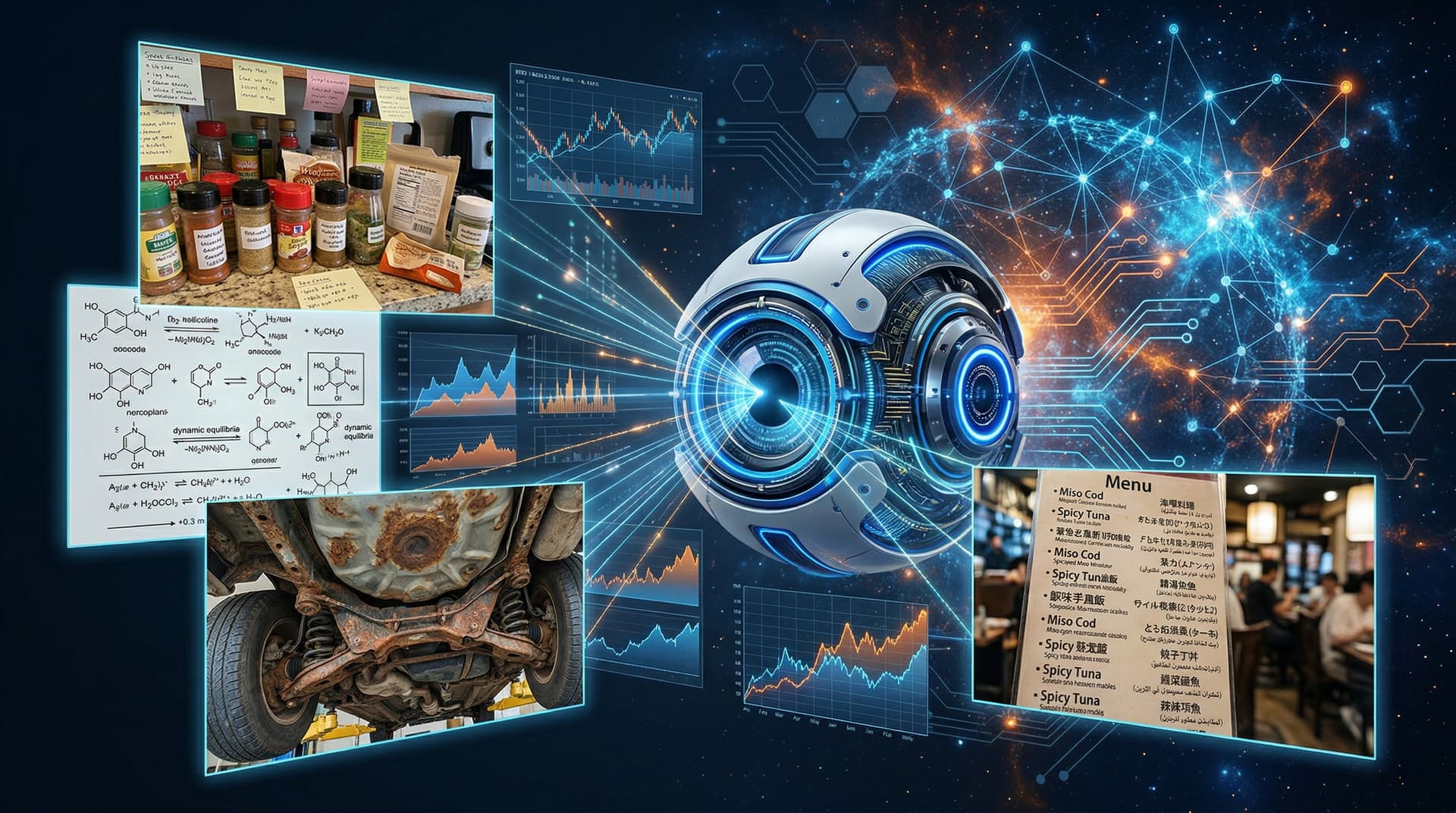
What sets Grok-1.5V apart is its prowess in 'RealWorldQA,' a proprietary benchmark xAI developed to test understanding of everyday scenes. Unlike sanitized datasets, RealWorldQA draws from uncurated images across the globe, capturing nuances like handwritten notes on packaging or spatial relationships in photos. Here, Grok-1.5V achieves 68.7% accuracy, eclipsing GPT-4V's 61% and Gemini Pro 1.5's lower scores.
The model shines in diverse tasks:
- Diagrams and Charts: Grok-1.5V excels at interpreting complex visuals like electrochemistry diagrams, nutritional labels, and even abstract sketches. In one demo, it accurately explains a flowchart for a chemical reaction, identifying reagents and products with precision.
- Photographs: It handles real-life photos with contextual awareness, such as translating a menu in a foreign script or estimating object counts in cluttered scenes.
- Specialized Domains: From analyzing a car's undercarriage for rust to decoding a video game screenshot's mechanics, Grok-1.5V demonstrates practical utility.
xAI emphasizes that Grok-1.5V was evaluated on the 'v long' version of their benchmarks, using up to 128K tokens—a nod to its efficiency in handling extended contexts without the massive compute demands of rivals.
Benchmark Breakdown
To quantify its edge, xAI shared comparative results:
| Benchmark | Grok-1.5V | GPT-4V | Gemini Pro 1.5 | |--------------------|-----------|--------|----------------| | RealWorldQA | 68.7% | 61% | Lower | | MMMU (Avg) | 73.2% | 69.1% | 64.3% | | MathVista | 63.8% | 55.7% | 52.2% | | AI2D | 90.4% | 82.5% | 82.9% | | DocVQA | 93.6% | 91.1% | 90.8% |
These scores highlight Grok-1.5V's leadership in vision-heavy tasks. Notably, on MMMU (Massive Multi-discipline Multimodal Understanding), it leads across STEM subjects. However, xAI cautions that benchmarks evolve quickly, and real-world performance matters more.
xAI's Strategic Play
Founded in July 2023 by Musk to counter what he sees as 'woke' biases in Big Tech AI, xAI has moved at warp speed. Grok-1 launched in November 2023, Grok-1.5 in March 2024, and now Grok-1.5V—all trained on the Colossus supercluster with 100,000 Nvidia H100 GPUs. Musk's recent $6 billion funding round for xAI, closed in May 2024? Wait, no—actually, as of April 2024, xAI had raised $6B in Series B by early May, but reports were circulating in April.
This release comes as Musk sues OpenAI, alleging betrayal of its nonprofit roots. Grok-1.5V's 'maximum truth-seeking' ethos, inspired by the Hitchhiker's Guide, aims to deliver unfiltered insights. Integration with X (formerly Twitter) gives it a unique data moat—real-time, multimodal feeds from millions of users.
Challenges and Criticisms
Not all is rosy. Multimodal models raise concerns over hallucinations—fabricating details in images—and biases in training data. xAI's transparency on training details remains limited, fueling debates on reproducibility. Privacy advocates question how X data is used, though xAI claims opt-in mechanisms.
Regulatory winds are shifting too. The Biden administration's AI executive order from October 2023 mandates safety testing for powerful models, and EU AI Act provisions loom. xAI's rapid scaling could draw scrutiny, especially post its massive GPU acquisition.
Broader Implications for AI Landscape
Grok-1.5V signals a commoditization of top-tier VLMs. With open-source efforts like Llama and Mistral gaining traction, proprietary models must differentiate via performance or ecosystems. xAI's focus on real-world QA could spur new benchmarks, pushing the field forward.
For developers, early access via the xAI API promises tools for robotics, AR/VR, and enterprise analytics. Imagine Tesla's Full Self-Driving leveraging Grok-like vision for edge cases.
Looking Ahead
xAI teases Grok 2 later in 2024, with enhanced multimodality and scale. Musk's vision of AI accelerating scientific discovery aligns with Grok-1.5V's diagram mastery—potentially revolutionizing fields like physics and biology.
As of April 17, 2024, Grok-1.5V cements xAI as a serious contender. In the AI race, where yesterday's SOTA is tomorrow's baseline, this launch is a reminder: innovation waits for no one. Stay tuned as we track these developments at CSN News.
Word count: 912