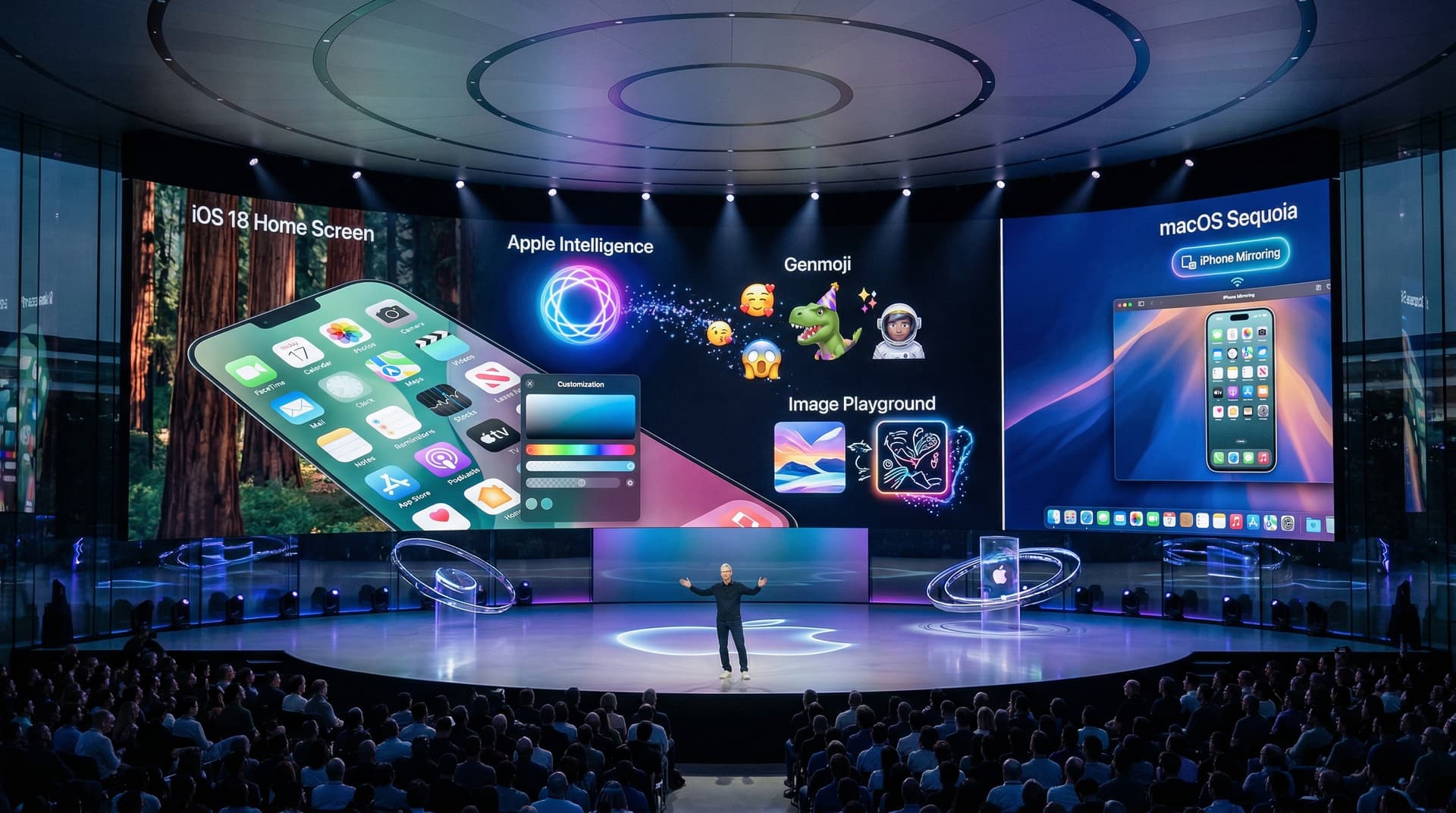
Apple's Worldwide Developers Conference (WWDC) 2024 got underway on June 10 in Cupertino, California, delivering a barrage of software announcements that signal a transformative shift for the company's ecosystem. CEO Tim Cook took the stage at Apple Park to unveil iOS 18, macOS Sequoia, and the highly anticipated Apple Intelligence—a suite of AI-powered features designed to make interactions with Apple devices more intuitive and private. With no new hardware in sight, the focus was squarely on software, developer tools, and bridging the gap with rivals in the generative AI race.
iOS 18: Customization Takes Center Stage
iOS 18 represents the biggest update to the iPhone operating system since its inception, emphasizing user control and flexibility. For the first time, users can freely arrange icons on the Home Screen, tint them in any color, and even make them translucent for a truly personalized look. The Control Center has been overhauled, allowing customization of controls, pages, and even resizing buttons. Photos app gets a massive redesign with thematic collections, a clean library view, and new filters.
Communication sees upgrades too: Messages now supports RCS (Rich Communication Services), bringing higher-quality media sharing and typing indicators to iPhone-Android chats without compromising iMessage's blue-bubble exclusivity. New features like scheduled sending, text effects, and satellite messaging for iPhone 14 users expand utility.
Privacy remains paramount, with options to lock and hide apps, requiring Face ID or Touch ID to access. Apple also introduced Math Notes in Calculator and a Passwords app for streamlined credential management across devices.
These changes arrive alongside support for the new iPhone 15 series and beyond, with developer betas available immediately and public betas in July. iOS 18's flexibility addresses long-standing user requests, positioning it as a more Android-like experience while retaining Apple's polish.
Apple Intelligence: On-Device AI Without the Creep Factor
The star of the show was Apple Intelligence, Apple's entry into generative AI. Unlike cloud-heavy competitors like ChatGPT or Gemini, Apple prioritizes on-device processing for speed and privacy, falling back to Private Cloud Compute for complex tasks. Features roll out this fall for iPhone 15 Pro, 15 Pro Max, and select iPads and Macs with M1 or later chips.
Key capabilities include:
- Writing Tools: Rewrite, proofread, and summarize text across apps like Mail and Notes.
- Image Playground: Generate custom images from descriptions, integrated into Messages.
- Genmoji: Create personalized emojis from text prompts.
- Siri 2.0: A more conversational Siri with on-screen awareness, personal context understanding, and app actions (e.g., "Move this email to my working files").
Apple emphasized security: no data training on user info, and Private Cloud uses custom Apple silicon with verifiable transparency. This approach differentiates Apple from OpenAI and Google, focusing on augmentation rather than replacement.
macOS Sequoia: Continuity Hits New Heights
macOS Sequoia (version 15) brings iPhone Mirroring to Mac, letting users control their iPhone screen from the desktop keyboard and trackpad—ideal for enterprise or privacy-conscious scenarios. Safari gains Highlights for article summaries, a redesigned Reader, and Web Eraser to remove distractions permanently.
Games get a boost with better controller support and Metal 4 for ray tracing. Other notes: live translation in Messages, YouTube transcripts in Notes, and Math Notes syncing across platforms. Sequoia maintains the Sonoma aesthetic but packs substantive workflow enhancements.
Updates Across the Ecosystem
- watchOS 11: Smart Stack auto-adjusts widgets, Training Load tracks workout impact, and Vitals app monitors health metrics like sleep and heart rate. Pregnancy tracking and Check In for walks add safety features.
- tvOS 18: InSight reveals actor info mid-show, enhanced search, and live sports controls.
- visionOS 2: Spatial photos from iPhone, travel Mac Virtual Display, and new gestures for Vision Pro.
Developer tools shine with Xcode 16 and Swift 6, promising faster builds, predictive code completion via Apple Intelligence, and battle-tested concurrency. Swift 6 enforces data-race safety, a boon for large-scale apps.
Developer and Industry Implications
WWDC 2024 underscores Apple's response to AI fervor post-ChatGPT. While late to the party, the integration is seamless, leveraging years of on-device ML (e.g., Face ID, photo recognition). Partnerships with OpenAI for optional ChatGPT access in Siri show openness without dependency.
For developers, SwiftUI improvements and Apple Intelligence APIs enable custom AI features. The App Store remains lucrative, but EU DMA pressures loom for sideloading—though not addressed today.
Competition heats up: iOS 18's customization rivals Android, RCS bridges messaging wars, and Apple Intelligence challenges Gemini and Copilot. Stock implications? AAPL rose pre-market on AI hype.
What Comes Next?
Developer betas drop today, public betas next month, full releases this fall. WWDC sessions continue through June 14, diving into APIs and frameworks. Expect third-party apps to leverage these tools rapidly—imagine AI-enhanced productivity suites.
Apple's software pivot reaffirms its ecosystem strength: 2.2 billion active devices, unmatched privacy, and now AI smarts. iOS 18 and Apple Intelligence aren't just updates; they're a foundation for the next decade of computing.
As Tim Cook closed: "Intelligence on device. Intelligence that understands you. Intelligence that protects your privacy." WWDC 2024 delivers on that promise, setting the stage for smarter, more personal Apple experiences.
(Word count: 912)