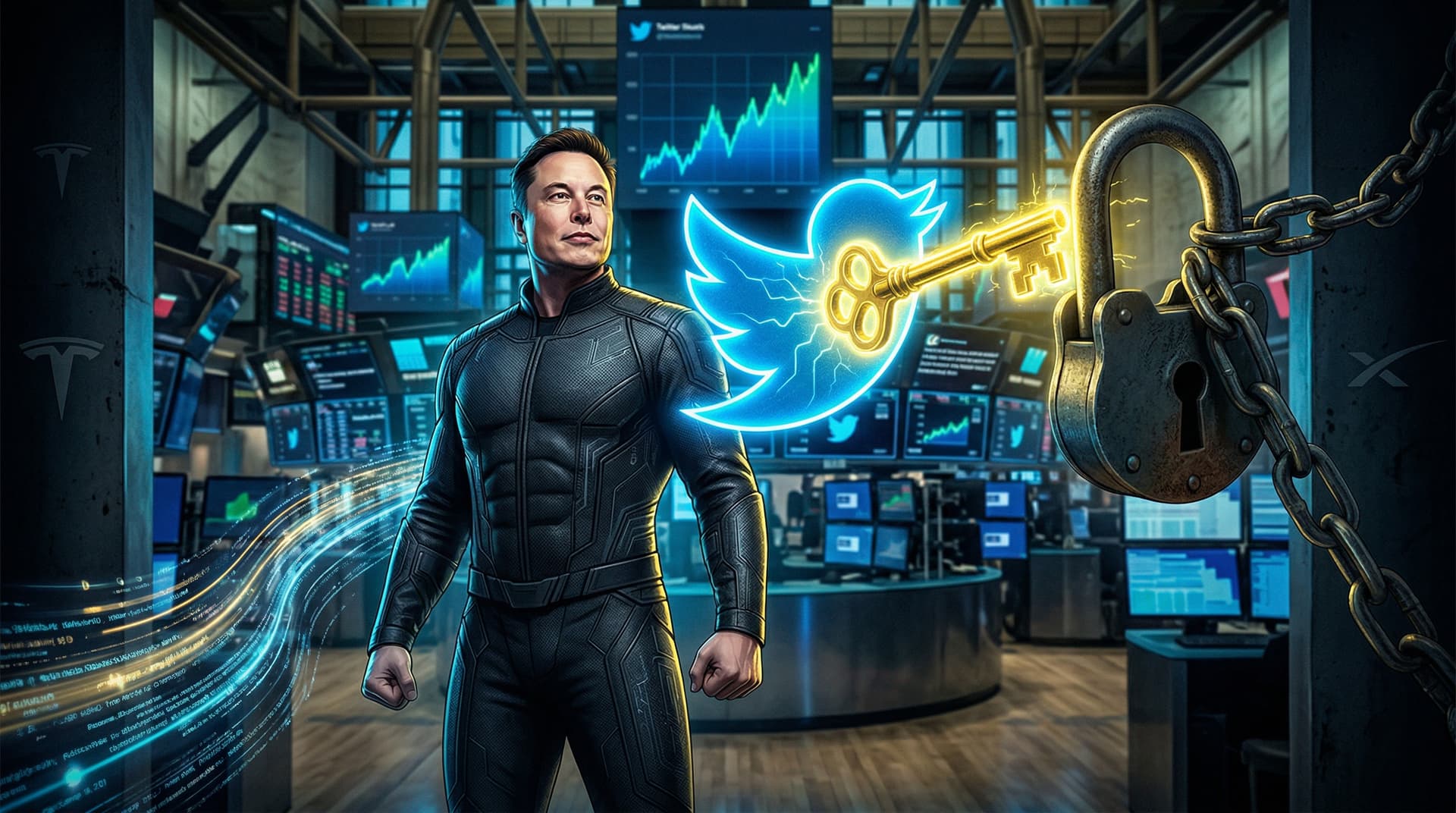
In a move that has sent shockwaves through the technology and finance sectors, Tesla CEO Elon Musk announced on April 14, 2022, his intention to acquire Twitter for $54.20 per share, valuing the company at approximately $44 billion. This unsolicited bid comes just weeks after Musk disclosed a significant stake in the social media platform, raising speculation about his plans.
Musk's Growing Influence on Twitter
Musk's relationship with Twitter has evolved rapidly. On March 4, he revealed owning 9.2% of the company's shares, making him its largest individual shareholder. This disclosure followed reports of his heavy engagement on the platform, where he frequently critiques content moderation policies and champions unrestricted free speech.
Over the past months, Musk has polled his 80 million-plus followers on key issues, such as whether Twitter adheres to free speech principles—a cornerstone of democracy—and if the company should become private. A majority responded affirmatively, fueling rumors of a potential takeover.
On April 4, Musk was offered a board seat by Twitter, which he initially accepted. However, he withdrew on April 10, citing that the arrangement would limit his ability to pursue broader changes. This paved the way for his aggressive bid.
Details of the Offer
In a letter to Twitter Chairman Bret Taylor, Musk stated, "I invested in Twitter as I believe in its potential to be the platform for free speech around the globe." He emphasized that Twitter's current structure as a public company hinders innovation, proposing to take it private to foster rapid development.
The offer price of $54.20 per share represents a 38% premium over Twitter's closing price on April 1, the last trading day before Musk's stake was public. Financing for the deal includes Musk's existing shares, $21 billion in cash commitments from banks like Morgan Stanley, and $12.5 billion in debt secured against his Tesla holdings.
Musk committed to a firm offer, stating he has secured the funds and does not intend to pursue alternative transactions. "My offer is the best path forward for the approval of Twitter's Board of Directors, its shareholders and all stakeholders," he wrote.
Twitter's Response and Market Reaction
Twitter's board has adopted a 'poison pill' strategy—a shareholder rights plan activated on April 15—to prevent a hostile takeover. This mechanism allows other shareholders to buy additional stock at a discount if anyone acquires more than 15% stake, diluting the bidder's influence.
CEO Parag Agrawal addressed employees, stressing a deliberate evaluation process. Shares surged 20% initially on bid news but pulled back amid uncertainty.
Analysts are divided. Some see it as overvalued given Twitter's stagnant user growth (around 220 million monetizable daily active users) and $221 million Q1 loss. Others praise Musk's vision for revitalizing the platform through software improvements, like better algorithms and open-sourcing code.
Implications for Software and Social Media
Twitter, as a core software platform, powers global discourse via its microblogging app and API. Musk's bid highlights tensions in social media software: algorithmic bias, censorship, and monetization.
He has criticized Twitter's 'shadowbanning' and promised transparency in moderation software. Potential changes could include rewriting recommendation engines in languages like Rust for efficiency or integrating end-to-end encryption inspired by Signal.
This acquisition could accelerate Twitter's software evolution, competing with Meta's Facebook, TikTok's algorithm-driven feeds, and emerging decentralized platforms like Mastodon. For developers, an open-sourced Twitter could spur innovation in bots, analytics tools, and third-party apps.
Broader Tech Landscape
Musk's move echoes past tech buyouts, like Microsoft's $26B LinkedIn deal in 2016 or Salesforce's $28B Slack acquisition in 2020. However, regulatory scrutiny looms, especially post-Activision Blizzard saga.
The FTC and EU may probe antitrust issues, given Musk's control over X.com (PayPal roots), Tesla's Full Self-Driving software, and SpaceX's Starlink. Free speech advocates cheer, while critics fear amplification of misinformation.
Investors watch Tesla stock, down amid distraction concerns. Musk pledged no Twitter interference with Tesla operations.
Stakeholder Reactions
- Jack Dorsey, co-founder: Posted a heart emoji to Musk's bid tweet, signaling support.
- Investors: Billionaire Ron Baron backs Musk; Vanguard, BlackRock (top holders) may sway.
- Users: Mixed; some hail free speech, others dread chaos like pre-2018 moderation laxity.
- Competitors: Meta, Google monitor for talent exodus or feature copycats.
What Happens Next?
Twitter's board has until May 13 (60 days post-stake disclosure) to respond. If rejected, Musk could walk or launch a proxy fight. Success would mark his largest venture post-Tesla/SpaceX.
For software enthusiasts, this saga underscores platforms' power. Twitter's codebase—millions of lines in Scala, Java—could transform under Musk's agile ethos, akin to Tesla's OTA updates.
As of April 18, markets await. This bid isn't just financial; it's a referendum on social media software's future.
Word count: 912