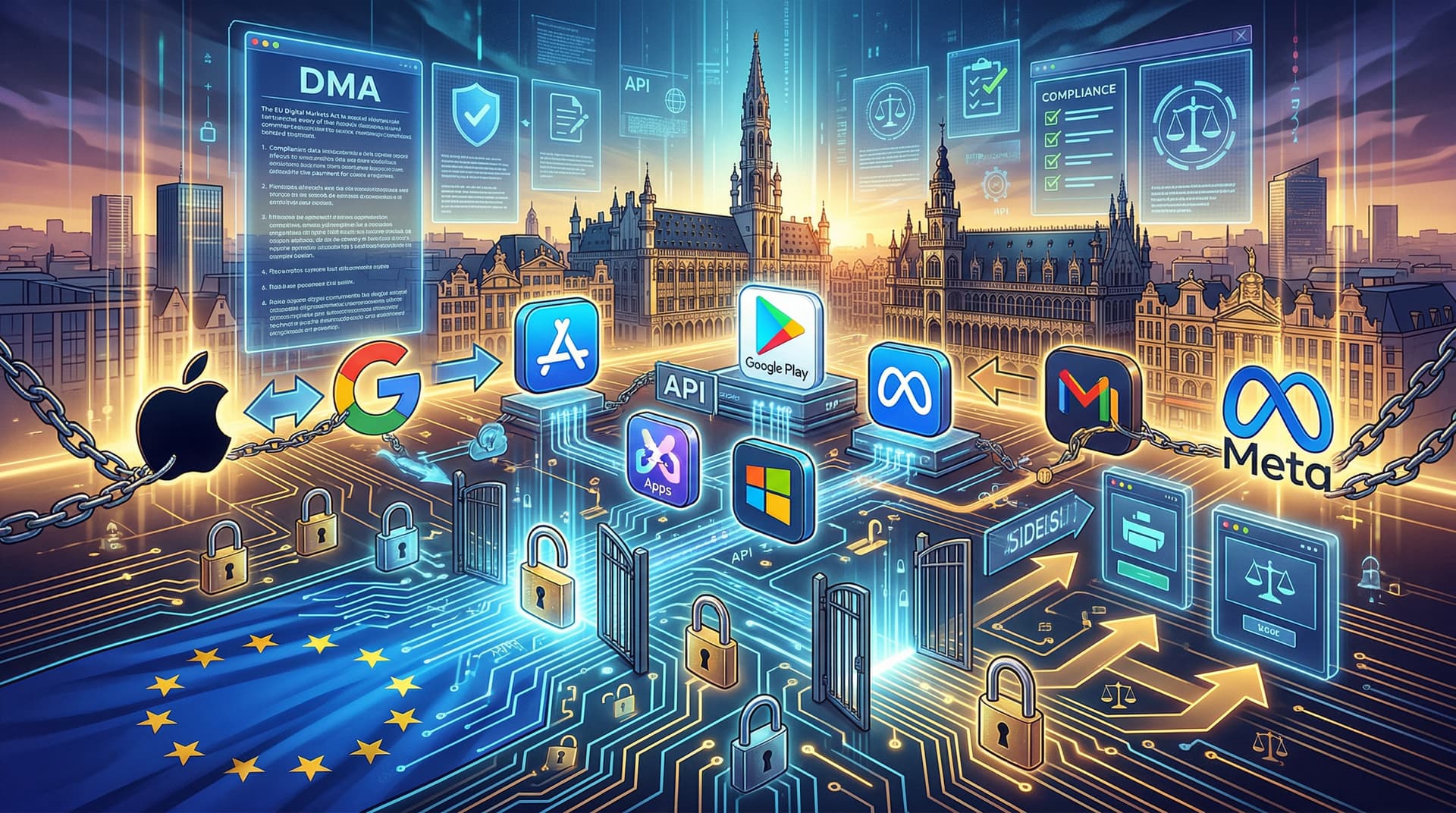
The European Union has stepped up its regulatory game in the digital realm. On November 1, 2023, the Digital Markets Act (DMA) officially entered into application, marking a pivotal moment for the software and technology sectors. This landmark legislation aims to curb the dominance of large tech platforms and promote a fairer, more competitive digital single market.
Designated as "gatekeepers," six major companies—Alphabet (Google's parent), Amazon, Apple, ByteDance (TikTok's owner), Meta, and Microsoft—now face stringent obligations. These rules target core platform services (CPS) such as app stores, browsers, operating systems, and social networks, which are seen as choke points in the digital economy.
What is the Digital Markets Act?
Passed by the European Parliament and Council in 2022, the DMA is a proactive regulation, unlike traditional antitrust laws that react to proven violations. It proactively imposes "do's and don'ts" on gatekeepers to prevent anti-competitive practices before they harm the market.
Key obligations include:
- Interoperability: Gatekeepers must allow third-party apps and services to work seamlessly with their platforms. For instance, messaging apps like WhatsApp (Meta) must interconnect with rivals.
- No Self-Preferencing: Search engines and app stores cannot favor their own products. Google's search results and Apple's App Store must treat competitors equally.
- Sideloading and Alternative Payments: Users must be able to install apps from outside official stores and use alternative payment systems without punitive fees.
- Data Portability and Access: Users can transfer data between services, and business users gain access to aggregated data generated on the platform.
- Browser and Engine Choice: Operating systems like Android and iOS must permit third-party browsers and default search engines.
Non-compliance could result in fines of up to 10% of global annual turnover, escalating to 20% for repeat offenses, and even structural remedies like divestitures in extreme cases.
Impact on Software Ecosystems
The software industry stands to be transformed. Apple's iOS App Store, long criticized for its 30% commission and closed ecosystem, faces the most immediate scrutiny. Under DMA, Apple must allow sideloading—installing apps from sources beyond the App Store—and support alternative browser engines beyond WebKit. This could democratize iOS development, enabling indie developers and smaller studios to bypass Apple's gatekeeping.
Google's Android and Play Store will see similar changes. While Android already supports sideloading, DMA enforces fairer billing and choice screens for browsers and search engines. Developers anticipate reduced fees and broader distribution channels, potentially lowering barriers for software innovation.
Microsoft, designated for its Windows OS, Edge browser, and Bing search, must ensure equal treatment in its ecosystem. Meta's platforms, including Facebook and Instagram, will need to open up data access and allow interoperability, which could spur new social software integrations.
Amazon's app store and ByteDance's TikTok face rules ensuring fair treatment of third-party sellers and content creators, impacting e-commerce and short-video software tools.
Company Reactions and Preparations
Tech giants have been gearing up since their gatekeeper status was confirmed in September 2023. Apple has outlined compliance plans, including new EU-specific web apps and reduced commissions via its "Small Business Program" extended to the region. However, CEO Tim Cook has voiced concerns that opening the ecosystem could introduce privacy and security risks—a common refrain from closed-platform advocates.
Google has committed to implementing choice screens for search and browsers in Europe, building on prior Android changes under antitrust rulings. Sundar Pichai emphasized balancing innovation with regulation.
Meta's Mark Zuckerberg called the DMA a step toward openness, though the company warns of potential fragmentation in user experiences. Microsoft, leveraging its Azure cloud, sees opportunities in promoting standards-based interoperability.
Smaller software firms and developers are jubilant. The Coalition for App Fairness, backed by Epic Games and Spotify, hailed the DMA as a "victory for competition." They argue it will lower costs and foster innovation in areas like cloud software, SaaS tools, and mobile apps.
Broader Implications for Software Innovation
The DMA's ripple effects extend beyond consumer apps to enterprise software. Interoperability mandates could accelerate standards in APIs and protocols, benefiting sectors like CRM, productivity suites, and AI tools. For instance, easier data portability might empower users to switch between competing cloud services without lock-in.
However, critics worry about unintended consequences. Fragmented experiences could confuse users, and rushed compliance might introduce bugs or vulnerabilities in software updates. There's also the question of enforcement: The European Commission, with DMA dedicated investigators, will monitor compliance, with full obligations kicking in by March 7, 2024.
Globally, the DMA sets a precedent. The UK is mulling a similar regime, and U.S. lawmakers eye app store reforms. For software companies outside the gatekeepers, this levels the playing field, potentially spurring mergers, acquisitions, and new entrants in Europe's $500 billion digital market.
Looking Ahead
As of November 4, 2023, the DMA is in its early enforcement phase. Gatekeepers have six months to report compliance measures, with investigations possible sooner for suspected breaches. This isn't just regulatory theater—it's a structural shift for software platforms.
Developers, watch this space: Tools for alternative distribution, cross-platform development, and compliance auditing will boom. For users, expect more choices in apps, browsers, and payments. The EU's bold move challenges Silicon Valley's status quo, betting that regulated openness will ignite the next wave of software innovation.
In the words of EU Competition Commissioner Margrethe Vestager, "Fair rules lead to fairer markets." Whether this delivers cheaper apps, innovative features, or merely compliance headaches remains to be seen—but the software world has irrevocably changed.
Word count: 912