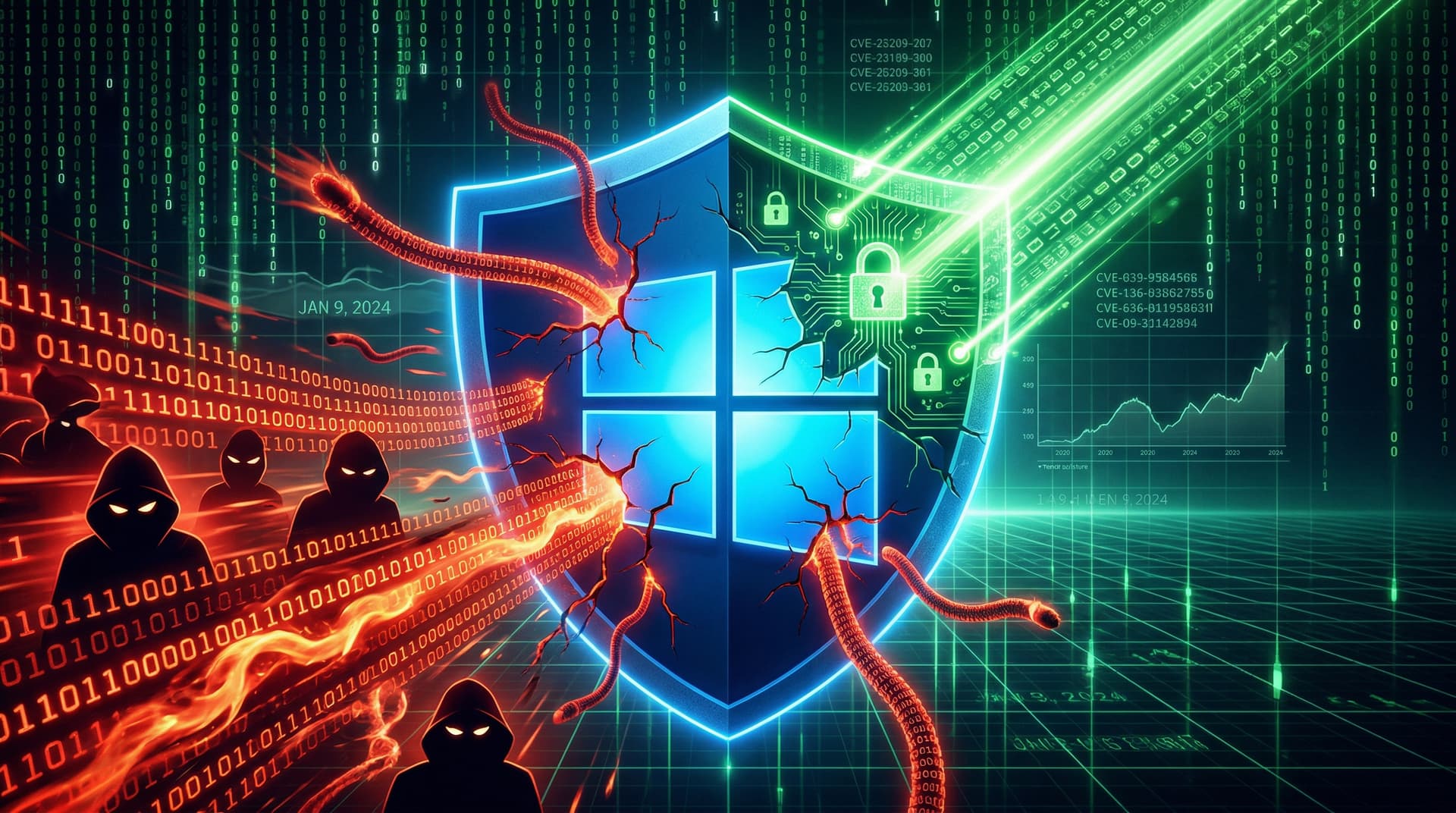
In the ever-evolving landscape of cybersecurity, Microsoft has once again stepped up with its monthly Patch Tuesday salvo. On January 9, 2024, the tech giant unleashed a comprehensive set of security updates addressing 49 vulnerabilities across its sprawling ecosystem of Windows operating systems, Office suite, and other software products. Among these, a standout concern is CVE-2024-20674, a zero-day elevation of privilege vulnerability in the Windows Win32k component that Microsoft confirmed was actively exploited in the wild prior to patching.
This release comes at a pivotal time, as threat actors continue to leverage unpatched flaws for ransomware, espionage, and data theft. With enterprises and consumers alike relying on Microsoft's software stack, the stakes couldn't be higher. Security researchers and IT administrators worldwide are scrambling to deploy these patches to forestall potential breaches.
Spotlight on the Zero-Day: CVE-2024-20674
The crown jewel—or rather, the most urgent fix—in this month's batch is CVE-2024-20674. This elevation of privilege (EoP) vulnerability affects the Windows Win32k graphics kernel subsystem, allowing an attacker with local access to escalate privileges to SYSTEM level. Microsoft rated it Important (CVSS score of 7.8), but its real-world exploitation elevates its priority.
According to Microsoft's security advisory, threat actors were chaining this flaw with other techniques to gain higher privileges on compromised Windows systems. While specifics on the attack campaigns remain under investigation, early reports from firms like Zerodium and security blogs suggest ties to nation-state actors targeting high-value targets. "This zero-day underscores the persistence of local privilege escalation as a gateway for broader system compromise," noted Satnam Narang, senior staff research engineer at Tenable.
Patch KB5034123 for Windows 10 and equivalents for other versions resolve this issue. No evidence points to widespread exploitation, but the 'in the wild' tag means IT teams should prioritize it.
Vulnerability Breakdown: Critical and High-Risk Flaws
Beyond the zero-day, Microsoft's bulletin details a diverse threat portfolio:
- 5 Critical vulnerabilities, primarily remote code execution (RCE) bugs.
- 44 Important issues, including EoP, information disclosure, and denial-of-service (DoS).
Key highlights include:
| CVE ID | Severity | Type | Affected Products | |---------------------|----------|-----------------------|----------------------------| | CVE-2024-0649 | Critical | RCE | Microsoft Office Publisher | | CVE-2024-21290 | Critical | RCE | Windows Scripting | | CVE-2024-20674 | Important| EoP (Zero-Day) | Windows Win32k | | CVE-2024-21338 | Critical | RCE | Windows Kernel | | CVE-2024-20767 | Critical | RCE | Hyper-V |
RCE flaws in Office apps like Publisher (CVE-2024-0649) could allow attackers to execute arbitrary code simply by tricking users into opening malicious documents. Similarly, Hyper-V vulnerabilities pose risks to virtualized environments, potentially enabling VM escapes.
Microsoft Exchange Server also received patches for 12 flaws, including a privilege escalation bug (CVE-2024-21497) that could lead to server compromise. No zero-days there, but the volume demands attention from on-prem Exchange admins.
Broader Ecosystem Impacts
This Patch Tuesday extends beyond client OSes:
- Windows Server 2022/2019: Multiple kernel and networking fixes.
- .NET Framework: Denial-of-service mitigations.
- Visual Studio: Code execution patches.
- SQL Server: Information disclosure vulnerabilities.
Chromium-based Edge received upstream fixes from Google, bundled in. For Azure and cloud users, related updates ensure hybrid environments stay fortified.
Comparatively, December 2023's Patch Tuesday tackled 89 CVEs, including three zero-days. January's lighter load (49) might signal a brief respite, but trends show attackers increasingly targeting Microsoft stacks—over 60% of ransomware groups weaponize Windows flaws, per Sophos reports.
"Patch Tuesday remains the cybersecurity calendar's North Star," says Kevin Beaumont, director of cybersecurity at CyberArk. "But with zero-days slipping through, organizations need layered defenses: EDR, zero-trust, and rapid patching pipelines."
Historical Context and Trends
Patch Tuesday, a Microsoft tradition since 2003, synchronizes updates on the second Tuesday of each month (or nearest business day). January 2024's release aligns with heightened global tensions, where state-sponsored hacking groups like Russia's Nobelium and China's Salt Typhoon probe for weaknesses.
Data from the Zero Day Initiative (ZDI) indicates 2023 saw 78 zero-days disclosed, a 50% YoY increase. Microsoft's share? Dominant, reflecting its market share but also code complexity. Windows 11 users fare slightly better thanks to enhanced mitigations like VBS and HVCI, but legacy Win10 support (ending Oct 2025) amplifies risks.
Recent incidents, like the Change Healthcare ransomware tied to unpatched Citrix, remind us: delays cost millions. Enterprises using WSUS or Intune report deployment success rates above 90%, but consumer auto-updates lag.
Actionable Advice for Users and Admins
Immediate Steps: 1. Check for Updates: Windows Settings > Update & Security > Windows Update. Install KB5034123 et al. 2. Enterprise Tools: Use WSUS, SCCM, or Intune for mass deployment. Test in staging first. 3. Office/Exchange: Enable auto-updates; scan for tampered files. 4. Monitor Logs: Watch Event Viewer for exploitation IOCs. 5. Backup: Always before patching.
For consumers, enable automatic updates—it's a set-it-and-forget-it safeguard. "Don't wait for Patch Wednesday," quips Microsoft's own security team in advisories.
Third-party tools like Ninite or Patch My PC can streamline non-MS patches, as Adobe and Oracle issued concurrent fixes.
Looking Ahead: AI, Quantum, and Patch Fatigue
As Microsoft integrates Copilot AI across products, new attack surfaces emerge—prompt injection, anyone? January patches hint at defenses, but future Tuesdays will test AI security postures.
In conclusion, January 2024's Patch Tuesday isn't just routine maintenance; it's a bulwark against sophisticated threats. With a confirmed zero-day patched, Microsoft reaffirms its commitment, but user action seals the deal. Stay vigilant, update promptly, and keep cybersecurity in your 2024 resolutions.
CSN News will monitor post-patch exploits and provide deployment guides. Sources: Microsoft Security Response Center, Zerodium, Tenable Research.
(Word count: 912)