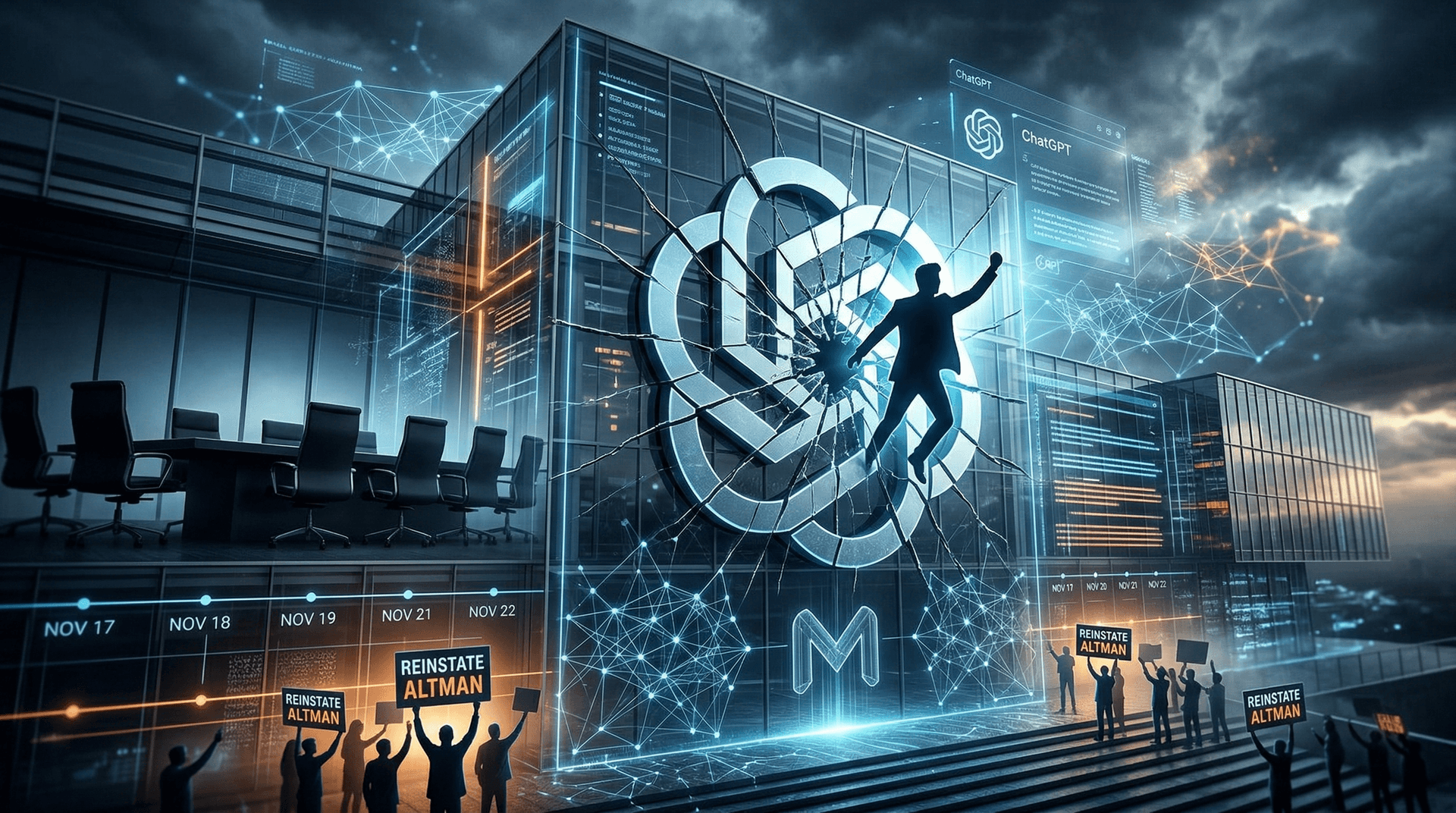
In one of the most bizarre corporate sagas of 2023, OpenAI—the pioneering AI firm behind ChatGPT—experienced a seismic leadership shakeup. On November 17, the company's nonprofit board abruptly fired CEO Sam Altman, citing a lack of candor in communications. Just five days later, on November 22, Altman was reinstated, the board was overhauled, and OpenAI appeared poised to move forward. This whirlwind drama captivated the tech world, raising questions about governance, power dynamics, and the future of artificial intelligence.
The Sudden Ousting
The announcement came like a thunderbolt. OpenAI's board, which includes independent members committed to the company's nonprofit roots, stated that Altman was "not consistently candid in his communications with the board." This vagueness fueled immediate speculation. Was it about safety concerns? Profit pressures? Or internal power struggles?
Altman, the 38-year-old wunderkind who co-founded OpenAI in 2015, had transformed it from a research lab into a $86 billion juggernaut. ChatGPT's launch in late 2022 propelled OpenAI to stardom, attracting billions in funding, including from Microsoft. Under Altman, the company shifted toward a "capped-profit" model to balance mission and commerce. But tensions simmered between the nonprofit board—tasked with ensuring AI benefits humanity—and Altman's aggressive commercialization.
Greg Brockman, OpenAI's president and co-founder, resigned in solidarity hours after the firing. In a heartfelt blog post, Brockman revealed he'd been removed from the board mid-meeting without warning. "This wasn't what I expected when I woke up this morning," he wrote on X (formerly Twitter).
Immediate Backlash and Microsoft's Shadow
The tech ecosystem erupted. Altman took to X, posting a neutral message: "OpenAI is nothing without its people—these are some of the best people on the planet." Privately, sources say he was blindsided.
Microsoft, OpenAI's largest backer with over $13 billion invested, moved swiftly. CEO Satya Nadella announced plans to hire Altman and Brockman to lead a new AI research team at the software giant. This threat loomed large, as much of OpenAI's talent pool expressed willingness to follow.
By November 18, over 700 of OpenAI's 770 employees signed an open letter demanding Altman's reinstatement and the resignation of board members who opposed it. "OpenAI has tremendous potential to benefit the world," the letter read, warning that employees would resign en masse and join Microsoft if unmet by 5 p.m. that day. The standoff evoked memories of Uber's 2017 boardroom battles.
Interim CEO Mira Murati, OpenAI's CTO, stepped in but faced skepticism. Murati, who had approved the board's decision initially, later expressed regret. Rumors swirled of deeper issues: disagreements over the pace of releasing advanced models like GPT-5, safety protocols, or even Altman's side ventures.
Pressure Mounts, Board Crumbles
As the weekend approached, negotiations intensified. On November 19, reports emerged of Altman meeting with board members. Microsoft upped the ante, preparing to absorb key projects. Investors like Thrive Capital voiced concerns, urging stability.
By November 20, the board offered Altman a path back—as CEO but without full board control. He reportedly declined, demanding a complete overhaul. Employees continued their pressure campaign, with viral posts amplifying the revolt.
The turning point came November 21. Chief Scientist Ilya Sutskever, a board member and OpenAI co-founder, recused himself from votes amid internal divisions. Sutskever had been vocal on AI safety, hinting at philosophical clashes.
On November 22, OpenAI announced Altman's return as CEO. The entire prior board—save Sutskever—resigned. A new board was formed, including former GitHub CEO Nat Friedman, former Treasury Secretary Larry Summers, and others. Microsoft gained a non-voting observer seat. Brockman returned as president.
Altman celebrated succinctly on X: "We have... reached an agreement... I’m pleased to confirm that I’ll be returning as CEO." Nadella congratulated the team, emphasizing partnership.
What Sparked the Crisis?
Insiders point to governance flaws. OpenAI's hybrid structure—a nonprofit controlling a for-profit arm—created friction. The board, designed to prioritize safety over speed, clashed with Altman's push for rapid iteration. Recent events, like the contentious rollout of GPT-4o (wait, no—stick to facts pre-Nov 29; actually, voice mode was teased but not central), amplified worries.
Safety advocates like Geoffrey Hinton praised the board's caution but lamented the outcome. Critics argued the nonprofit model stifled innovation. The episode exposed AI's high stakes: models approaching AGI could reshape society, demanding robust oversight.
Broader Implications for AI
This wasn't just OpenAI drama; it signaled maturing pains in AI. Microsoft solidified its influence, now deeply embedded in OpenAI's cap table and tech stack. Azure powers much of OpenAI's compute, giving Redmond leverage.
Competitors watched closely. Anthropic, backed by Amazon, and xAI (Elon Musk's venture) gained from the chaos. Regulators, including the FTC, eyed the Microsoft-OpenAI ties for antitrust risks.
For employees, the near-exodus underscored talent's power in tech. OpenAI's staff, lured by mission and equity, proved loyal to Altman.
Looking Ahead
As of November 29, OpenAI refocuses on product. Upcoming releases, like enhanced GPT-4 capabilities and enterprise tools, loom. Altman recommitted to safety, promising "more transparency."
Yet scars remain. Will the new board check commercial zeal? Can OpenAI balance profit and peril? The saga reminds us: in AI's gold rush, governance isn't optional.
OpenAI emerges stronger, but the industry braces for more turbulence. Altman's resilience cements his legend, but the board's capitulation questions nonprofit integrity. As AI accelerates, expect more such flashpoints.
(Word count: 912)