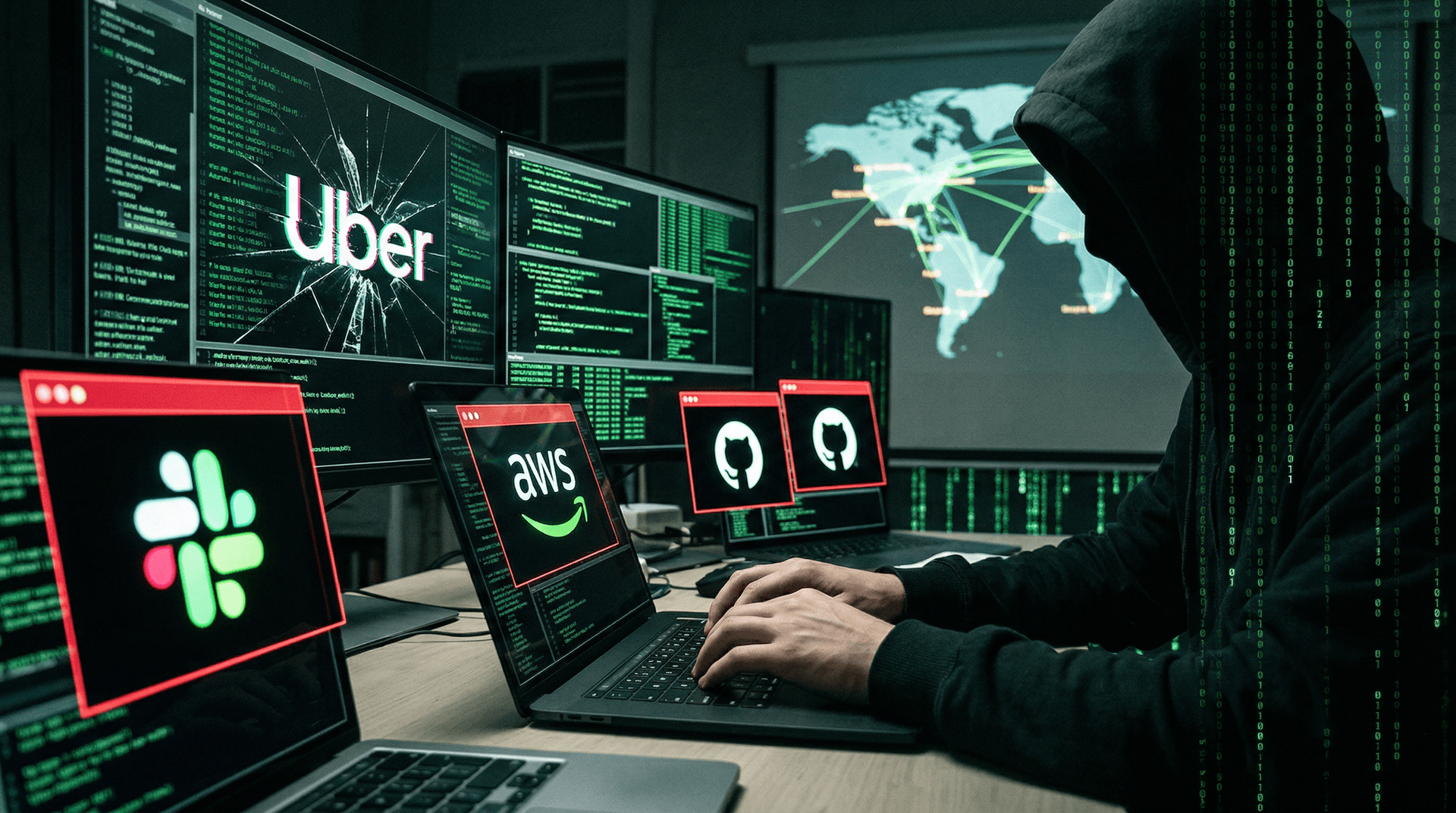
In a stark reminder of the persistent threats facing tech giants, Uber Technologies Inc. confirmed on July 15, 2022, that its internal systems had been compromised by a hacker. The intruder, who boasted about the breach directly in Uber's Slack channels, accessed a range of sensitive tools including the company's Slack workspace, Amazon Web Services (AWS) console, HackerOne bug bounty platform, Google Cloud Platform, and internal engineering repositories. While Uber stated that no consumer data or financial information was stolen, the incident underscores the fragility of even well-resourced companies against sophisticated social engineering tactics.
How the Breach Unfolded
The breach began when the hacker targeted an Uber contractor via social engineering. According to Uber's security team, the attacker tricked the contractor into handing over credentials, bypassing multi-factor authentication (MFA) in the process—a method increasingly common in modern cyberattacks. Once inside, the hacker elevated privileges, obtaining administrative access to Uber's VPN and private GitHub repositories containing source code.
A screenshot shared by the hacker in Uber's internal Slack channel captured the audacity of the attack: "I announce I am a hacker and Uber has suffered a data breach." This brazen move alerted Uber's security operations center (SOC), which swiftly locked down compromised accounts and launched an investigation. By July 15, Uber had notified employees and was working with external cybersecurity firms to assess the full scope.
Uber's Chief Information Security Officer (CISO), None Elfadil, detailed the response in a blog post: "Our security team has taken immediate action to secure our systems. We have no evidence of compromise to rider or driver accounts, and we are monitoring for any signs of data exfiltration."
Social Engineering: The Weakest Link
This incident exemplifies the rising prevalence of social engineering in cybersecurity breaches. Despite heavy investments in technical defenses like MFA, endpoint detection, and zero-trust architectures, human error remains the Achilles' heel. Cybersecurity experts note that attackers are leveraging tools like phishing kits, vishing (voice phishing), and even deepfake technology to impersonate trusted colleagues.
Kevin Mitnick, a renowned security consultant and former hacker, commented to CSN News: "Social engineering has always been my favorite vector because it exploits trust, not technology. Uber's case shows that even with MFA, a convincing pretext can unravel layers of protection. Companies must prioritize employee training and behavioral analytics."
Data from recent reports supports this trend. According to Verizon's 2022 Data Breach Investigations Report (released in May), 82% of breaches involved a human element, with social engineering accounting for 22% of cases. In the ride-hailing sector, Uber joins a list of victims including Lyft, which faced a smaller incident in 2021.
Uber's History of Security Challenges
This is not Uber's first brush with cybercriminals. In 2016, the company paid hackers $100,000 in Bitcoin to delete stolen data affecting 57 million users—a scandal that led to the resignation of then-CEO Travis Kalanick and a $148 million settlement with U.S. regulators. More recently, in 2021, Uber disclosed a breach where a hacker accessed an internal dashboard but caused no further harm.
Post-2016, Uber revamped its security posture, hiring top talent and implementing a robust bug bounty program via HackerOne, which ironically was compromised in this attack. The program has paid out millions to ethical hackers, but this event reveals gaps in insider threat detection.
Immediate Impact and Response
Financially, Uber's stock dipped slightly following the disclosure but recovered quickly, as no customer impact was reported. The company engaged CrowdStrike and other firms for forensic analysis. By July 28, Uber had restored full operations and mandated MFA re-enrollment for all employees.
Law enforcement involvement was swift. Uber reported the breach to the FBI and affected parties, cooperating fully. The hacker, whose identity remains unknown publicly, taunted security teams via email and Slack, suggesting a lone actor rather than a state-sponsored group.
Broader Implications for Cybersecurity
Uber's breach arrives amid a surge in high-profile attacks. Just weeks earlier, on July 11, Cisco patched a critical VPN vulnerability exploited by Chinese state actors. Ransomware groups like LockBit and Conti continue targeting enterprises, with the FBI disrupting Hive ransomware infrastructure on July 4.
For the tech industry, this incident reinforces the need for:
- Advanced MFA alternatives: Passkeys and hardware tokens over SMS-based 2FA.
- Zero-trust models: Continuous verification regardless of location.
- AI-driven anomaly detection: Flagging unusual logins or data access.
- Regular red-team exercises: Simulating real-world attacks.
Industry analyst Gartner predicts that by 2025, 75% of enterprises will shift from perimeter-based security to zero-trust. Uber's CISO emphasized ongoing investments: "We learn from every incident to strengthen our defenses."
Lessons for Businesses and Individuals
Small businesses and individuals aren't immune. Social engineering preys on curiosity and authority. Best practices include:
1. Verify unexpected requests via alternate channels. 2. Use password managers and unique credentials. 3. Enable all security features on cloud services. 4. Report suspicious activity immediately.
As cybersecurity evolves, so do threats. Uber's breach serves as a wake-up call: In 2022, vigilance is the ultimate defense.
CSN News will continue monitoring developments in this story.
(Word count: 912)