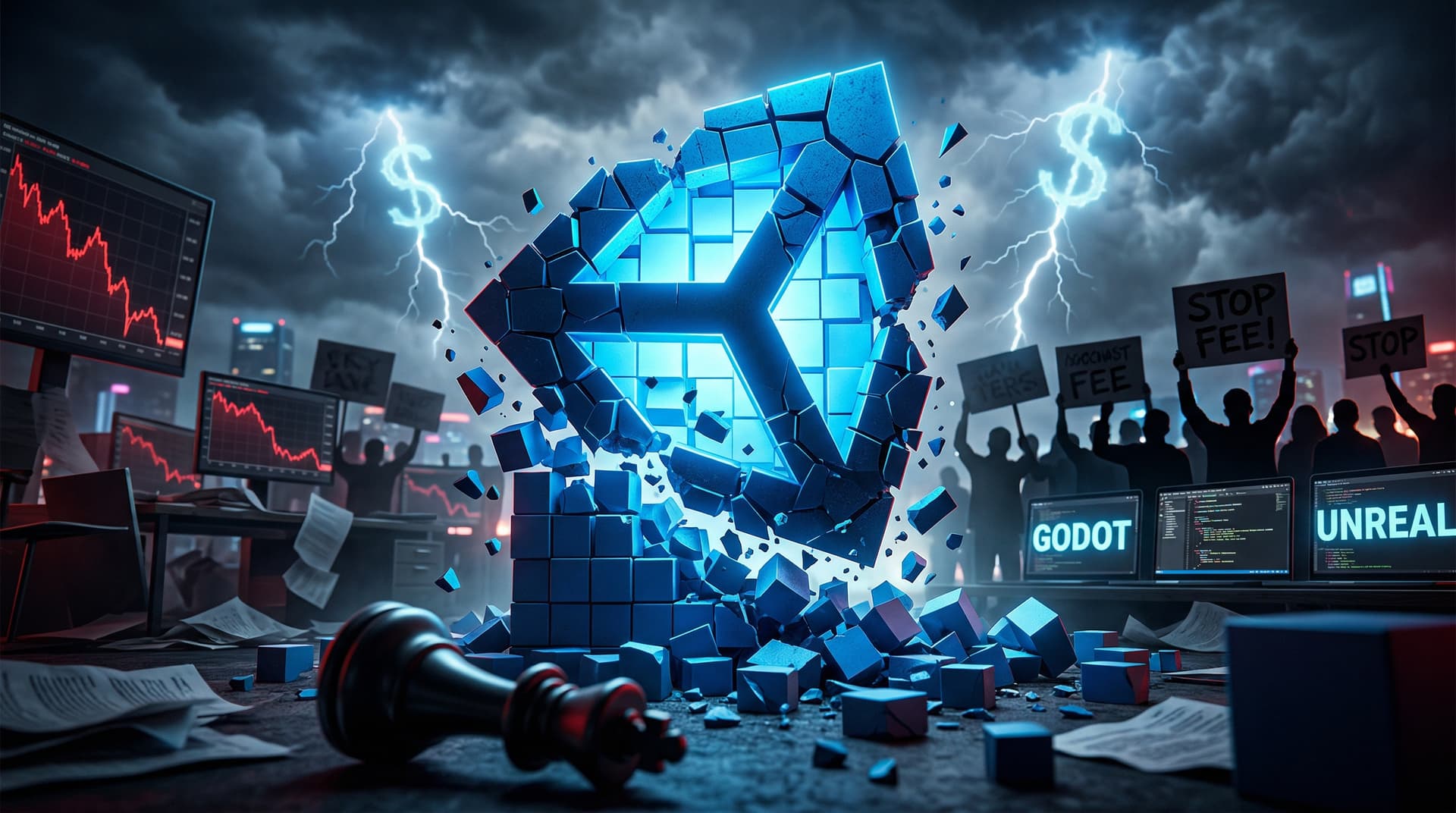
In a stunning development that underscores the perils of abrupt pricing changes in the software world, Unity Technologies announced on October 10, 2023, that CEO John Riccitiello and Chief Technical Officer Joachim Ante have stepped down. The resignations come in the wake of the company's ill-fated Runtime Fee policy, which ignited a firestorm in the game development community just weeks ago. This move signals a desperate attempt by Unity to salvage its reputation among the independent developers who form the backbone of its user base.
The Spark: Runtime Fee Announcement
The controversy erupted on September 12, 2023, when Unity unveiled its new monetization strategy during a blog post titled 'Unity Runtime Fee.' The policy proposed charging developers a fee for every game install beyond 200,000 lifetime installs for titles built with Unity versions released after January 1, 2024. For larger studios, thresholds scaled up to one million installs. The per-install fee was set at $0.20, with reductions for higher volumes.
Unity justified the change as necessary to fund ongoing development amid slowing revenue growth. Riccitiello, in communications to stakeholders, emphasized that the fees would support innovations like improved rendering and multiplayer tools. However, the devil was in the details: the fee applied retroactively to all installs, even for games made with older Unity versions once updated to newer ones. This 'install-bombing' vulnerability—where bad actors could artificially inflate installs to trigger fees—further fueled outrage.
Developer Revolt and Immediate Fallout
The gaming world exploded in response. High-profile developers like Rami Ismail (Vlambeer) called it 'predatory,' while studios such as The Wolf Among Us creator Telltale Games publicly considered ditching Unity. Social media platforms like Twitter (now X) and Reddit's r/Unity3D subreddit became battlegrounds, with #BoycottUnity trending. Even Fortnite maker Epic Games, a longtime Unity rival, piled on, highlighting the policy's potential to stifle indie innovation.
Unity's stock (NYSE: U) plummeted 10% in the days following the announcement, wiping out hundreds of millions in market value. By September 15, shares had fallen to around $27, reflecting investor fears over customer churn. Developers began migrating to alternatives like Godot (open-source and free) and Unreal Engine (Epic's royalty-based model, but without per-install surprises).
Petitions garnered tens of thousands of signatures demanding a reversal. YouTubers and influencers dissected the policy's flaws, estimating that successful titles like Among Us or Hollow Knight could face millions in retroactive fees.
Policy U-Turns and Leadership Shakeup
Under mounting pressure, Unity began backpedaling. On September 22, the company posted a revised plan: the fee would now apply only to games built with post-2024 Unity versions, with no retroactive charges for older installs. An 'advanced Unity Runtime' opt-in was introduced to verify legitimate installs and combat abuse. Safeguards included whitelisting for non-commercial uses and educational exemptions.
But the damage was done. Developers dismissed the changes as insufficient, pointing to ongoing uncertainties. On October 3, Unity announced further concessions: no fees for existing games updated to new versions, a Unity Personal tier remaining free up to $200,000 revenue (up from $100,000), and a full policy review involving a 'Unity Trust & Safety' team.
These tweaks failed to quell the unrest. On October 10, Unity's board acted decisively. Riccitiello, who had led the company since 2020 after stints at Electronic Arts, cited the need for 'new leadership to address recent challenges.' Interim CEO Matthew Bromberg, former Epic Games executive and Unity veteran, was appointed alongside Jim Whitehurst as interim president. Ante's departure was framed as part of a leadership transition.
In a statement, Riccitiello reflected: 'Unity has been a force for good in the world, giving creators the tools to bring their visions to life. My decision to step down is the right one for Unity and for me.' Bromberg promised 'radical transparency' and a developer survey to shape future pricing.
Broader Implications for Software Pricing
This saga exposes vulnerabilities in freemium-to-paid transitions for software platforms. Unity, powering 70% of mobile games and hits like Pokémon GO, Genshin Impact, and Cuphead, relies on a freemium model: free for small devs, subscriptions (Unity Pro/Enterprise) for pros. Revenue has stagnated post-mobile boom, prompting desperate measures.
Analysts like those at Wedbush Securities note parallels to Electronic Arts' 2012 loot box fiasco, which led to Riccitiello's prior exit. 'Unity underestimated developer loyalty and the network effects of its engine,' said Wedbush's Michael Pachter. Stock analyst Daniel Ahmad highlighted Godot's surge in downloads—up 400% in September.
For game devs, the lesson is diversification. Godot's node-based system and Unreal's Blueprint visual scripting gain traction, though Unity's asset store and ease-of-use remain strengths.
Road Ahead for Unity
Bromberg's Epic background could bridge divides—Unreal charges 5% royalties post-$1M, a model devs know. Unity plans a 'Monetization Roadmap' update and town halls. Q3 earnings on November 8 will test recovery; analysts forecast revenue flat at $525M but with churn risks.
Developers remain wary. 'Trust is broken,' tweeted indie dev Gavin Eisenbeisz. Yet, Unity's 3.5 million registered users and entrenched ecosystem offer hope. If Bromberg delivers stable pricing—perhaps a flat subscription hike—recovery is possible.
This episode reminds tech firms: in creator economies, alienate users at your peril. Unity's pivot may stabilize it, but the Runtime Fee scar will linger, shaping software monetization debates for years.
CSN News, October 17, 2023