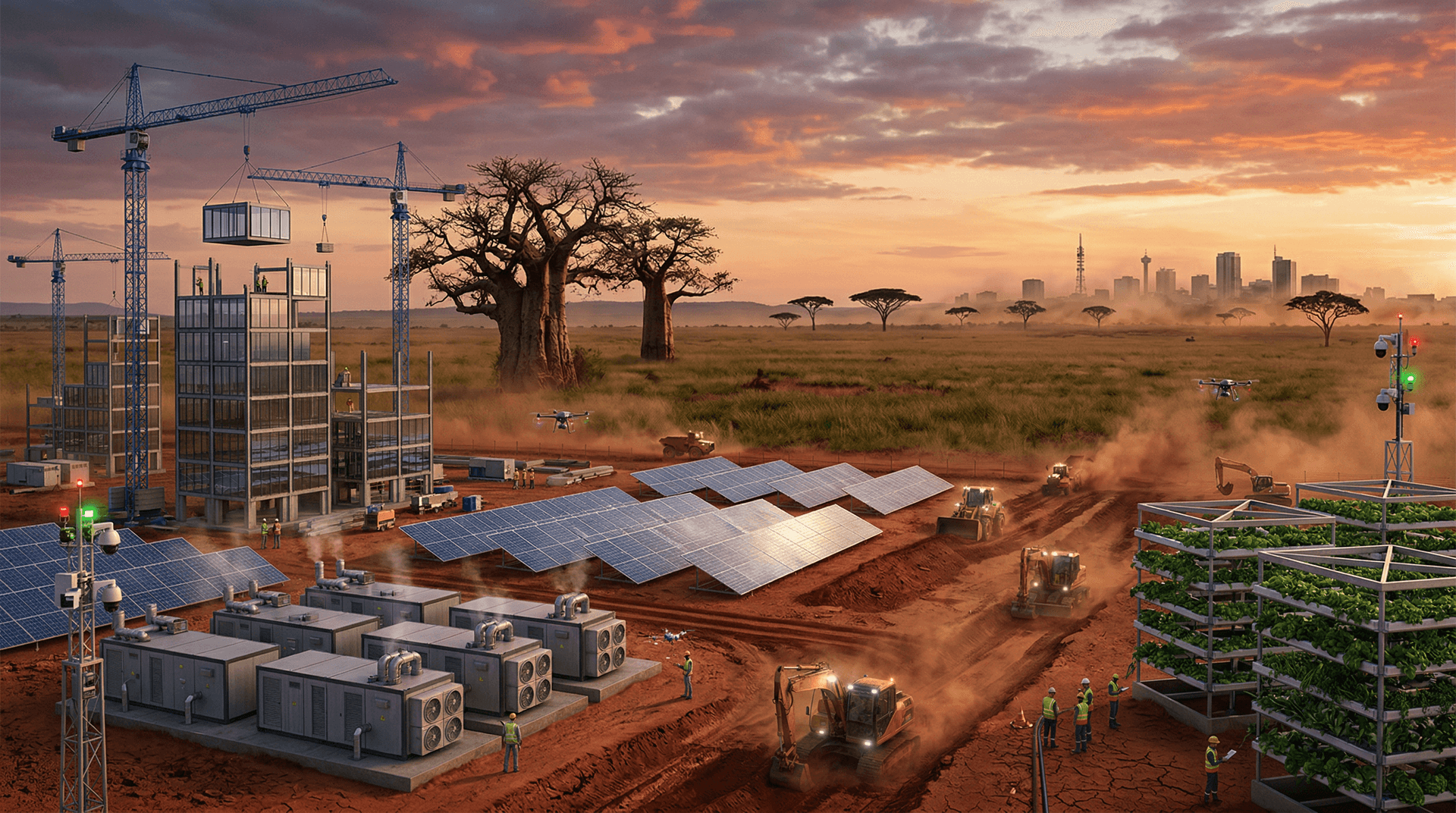
- Zimbabwe richest man launches $2B smart city on April 15, 2026.
- Bitcoin hits $74,628 USD with Fear & Greed at 23.
- Project creates 10,000 jobs, boosts GDP 2%.
Zimbabwe's richest man Strive Masiyiwa announced a $2 billion smart city project near Harare on April 15, 2026, according to Business Insider Africa reporter Kalin Thorpe. The project shifts focus from AI factories and cryptocurrency investments. Bitcoin traded at $74,628 USD that day, per CoinGecko data.
Masiyiwa founded Econet Wireless Zimbabwe Ltd in 1998. Forbes listed his net worth at $1.6 billion USD in its 2025 billionaires list, updated April 10, 2026.
Masiyiwa's Tech Background
Econet serves 15 million subscribers across Africa, per its annual report filed March 15, 2026, with the Zimbabwe Stock Exchange. Masiyiwa expanded into fintech with EcoCash, which processed $10 billion USD in transactions in 2025, per company filings.
Venture funding in Africa reached $5.4 billion USD in 2025, up 50% from 2024, per Partech Africa analyst Ndubuisi Ekekwe.
From AI Factories to Smart City
Masiyiwa invested $500 million USD in AI data centers in 2024, per Econet Wireless filings on March 1, 2026. The facilities drew 100 MW of power but operated at 40% capacity due to outages from Kariba Dam, Econet engineer Tinashe Chigwedere told Reuters on February 20, 2026.
The smart city will integrate AI for grid management from launch. Sensors aim to reduce power losses by 25%, per IBM Watson benchmarks in the project prospectus.
Crypto Holdings and Market Data
Masiyiwa held 5,000 BTC in 2025 and tested mining rigs. Africa accounted for 8.5% of global crypto volume, or $112 billion USD, per Chainalysis 2025 report by lead analyst Philip Gradwell, released January 15, 2026.
On April 15, 2026, Ethereum traded at $2,336.07 USD, down 1.5%; BNB at $619.21 USD, up 0.9%; and XRP at $1.36 USD, down 0.4%, all per CoinGecko.
The Crypto Fear & Greed Index stood at 23, indicating extreme fear, per Alternative.me data. Zimbabwe legalized crypto in 2024 under Reserve Bank Governor John Mangudya.
Bitcoin surpassed $70,000 USD due to $4.2 billion USD in U.S. ETF inflows in Q1 2026, per Bloomberg analyst Mike McGlone.
Smart City Details
The 5,000-hectare site lies 20 km from Harare. It targets 500 MW solar capacity with 200 MWh Tesla Powerpack storage.
AI-managed traffic will use 50,000 sensors, modeled on Songdo, South Korea, which has 40,000 nodes, per Songdo IBDC director Kim Soo-hyun's 2025 report.
Construction starts in Q3 2026 and creates 10,000 initial jobs, per a filing with Zimbabwe's Ministry of Lands by director Grace Muradzikwa on April 14, 2026.
Funding includes $1.2 billion USD equity from Masiyiwa and $800 million USD debt from the African Development Bank, per bank spokesperson Yasmin Mousa.
Tech Integration and Funding Trends
Blockchain via Hyperledger Fabric will secure land titles. Utilities payments use Stellar network crypto wallets.
AI forecasts energy demand with 95% accuracy, per IBM CityNext study reviewed by Econet CTO Douglas Mboweni. Autonomous robots will cut waste costs by 30%.
African smart city venture capital hit $1.2 billion USD in 2025, led by Nigeria's Eko Atlantic, per Partech Africa partner Serena Bakhache.
Economic Impact
The project will boost Zimbabwe's GDP by 2% over five years to $48 billion USD, per Ministry of Finance economist Tafadzwa Makoni's estimate on April 15, 2026.
It will attract 5,000 tech workers from South Africa's Cape Town and Kenya's Konza Technopolis, per Konza CEO Guy Scott.
With Bitcoin above $70,000 USD, Masiyiwa advised measured expansion amid a Fear Index of 23 during his Bloomberg TV interview on April 15, 2026. Zambia's Lusaka mayor Chilufya Tayali praised the model at the Africa Tech Summit.
This article was generated with AI assistance and reviewed by automated editorial systems.